 The Libertarian Catholic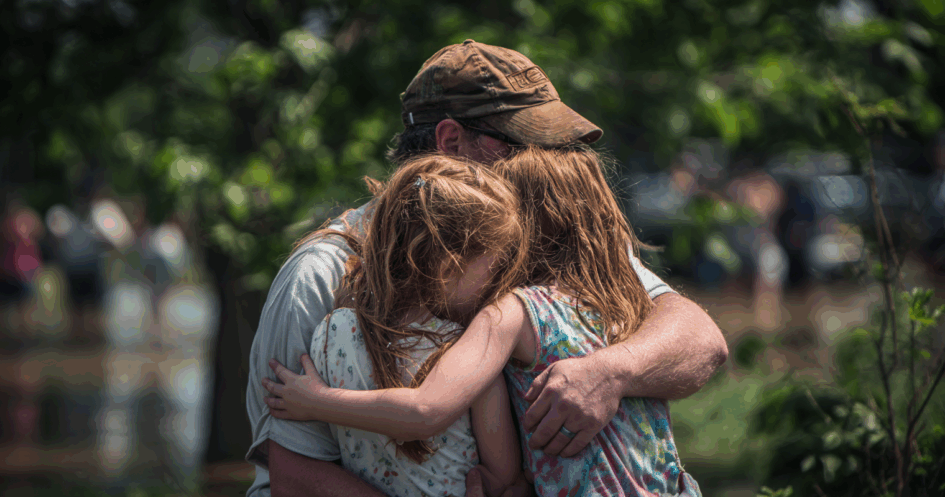
On July 4, 2025, the world became a lot darker. A group of young girls, full of promise and life, were swept away by a flash flood while camping near the Guadalupe River. What was meant to be a joyful, carefree retreat became a scene of unimaginable horror. As a parent, I can’t fathom the anguish these families are experiencing. There are no words sufficient for that kind of grief.
As a Christian, it’s enough to shake the foundations of faith itself. How could an all-powerful, all-loving Creator permit this? We might manage to reconcile human evil — wars, violence, hatred — as the consequence of free will. God allows freedom because love cannot be coerced. But what about a flash flood? What about nature’s indifference to our hopes, our children, our prayers? What about the silent sky above as families cried out for their daughters who would never come home?
The atheist’s argument seems to gain ground in moments like these. The idea of a benevolent God can feel naïve in the face of grief so raw.
The Christian Response
But Christianity has many answers to the question of pain and suffering, at least on paper. Most obviously, that suffering acts as a wake-up call to what’s important. As C.S. Lewis wrote in The Problem of Pain, “God whispers to us in our pleasures, speaks in our conscience, but shouts in our pains: it is His megaphone to rouse a deaf world.” Suffering strips away illusions of control, of permanence, of entitlement to a pain-free life.
Despite what some popular pastors claim, Christianity is not the prosperity gospel of easy answers and guaranteed blessings. In fact, it is founded on suffering, not worldly success.
The story of Job in the Old Testament offers one of Scripture’s clearest meditations on innocent suffering. Job was a righteous man, blameless in the eyes of God. Yet in a series of calamities, he lost his wealth, his health, and, most crushingly, his children. His friends insisted he must have sinned to deserve such punishment. But Job maintained his innocence and demanded an explanation from God.
When God finally answers, He does not provide Job with a reason. Instead, He reveals His own majesty, asking Job where he was when the foundations of the world were laid. In other words — God invites Job to trust in His wisdom, even without understanding His ways.
The faith itself was based on suffering as it was founded by a man who was innocent, scourged, spat upon, abandoned, and nailed to a cross. Jesus Christ didn’t come to abolish suffering in this world or even with His followers; He came to redeem it.
As such, followers of Christ can offer up their suffering as a way to unite with Our Savior. As Paul wrote in his letter to the Colossians, “I am now rejoicing in my sufferings for your sake, and in my flesh, I am completing what is lacking in Christ’s afflictions for the sake of his body, that is, the church” (Col 1:24).
And this redemptive suffering is the key. It is what distinguishes us from the non-Christian and is the answer to the question of pain and suffering.
The Ultimatum of Life
Suffering is inevitable in human life, and so we, as living humans are forced to choose, not how to avoid with suffering, but rather how to deal with it.
As Fulton Sheen once said, “Sometimes the only way the good Lord can get into some hearts is to break them.” And so, as we pray, weeping and mourning in this valley of tears, what are we to do? We have two choices. Do we become bitter, resentful, and closed off? Or do we become meek, compassionate, and more loving?
C.S. Lewis puts it plainly: “You will certainly carry out God’s purpose, however you act, but it makes a difference to you whether you serve like Judas or like John.” Tragedy is inevitable in this life. But how we react to it is the measure of our discipleship.
In the face of a tragedy like the Guadalupe flood, the most Christian response is solidarity with those who mourn. We weep with them. We refuse to offer shallow platitudes. We carry their crosses in whatever small way we can.
And for ourselves, we hug our children tighter. We become grateful — painfully, intentionally grateful — for every ordinary moment. For the laughter, the messes, the frustrations, the little hands in ours. Because none of it is guaranteed. We must love like there is no tomorrow. Because for some, there won’t be.
Suffer to Love
If there’s any consolation to be found in the wake of a tragedy so devastating, it’s this: if we can allow such sorrow to soften our hearts, to deepen our compassion, to strengthen our love for one another, and to draw us nearer to God, then those precious, innocent lives will not have been lost in vain.
Their short time on earth, though unbearably tragic in its ending, can still bear fruit in the way it changes us. If their memory compels us to hold our loved ones closer, to value each moment, to lift up the grieving, and to become people of deeper faith and mercy, then light will rise from even this darkness.
In this broken world, we cannot undo suffering — but we can decide that it will not be meaningless. In Christ, even the most senseless losses can be gathered up into something redemptive. May those little souls rest in the eternal embrace of the Father, and may we, for their sake, live with greater tenderness, greater courage, and a love that refuses to be extinguished by tragedy.