You seriously still don’t understand that it is solely by grace that we are saved, and that through faith, lest any man boast? You seriously still can’t grasp that true good works for God only follow after true faith is exercised, and that dead works, no matter how well intended, will be counted as sin in us? Our good deeds, if not specifically guided and inspired by God, are merely works of the flesh, no matter how well intended. Performing rituals, lighting candles and chanting encantations is all works of the law, fleshly, and sinful in the face of God’s Holy Spirit, who inspires all good works. Read Galatians 3:10, Romans 14:23 and Isaiah 64:6 if you don’t know this stuff. It is basic and foundational to the Christian faith! We first come in faith, THEN we are moved to do His perfect will. All religious efforts outside of this, are but filthy rags, and mainly intended as an outward display. In mass, you are not guided by God, but by the traditions of men, and by what others might think of any deviations. People LIKE their worldly religious traditions, and don’t appreciate any deviation from their comforting rituals, but where does that leave God? There’s no room LEFT for The Holy Spirit of God to move in such a congregation of outwardly professing church/chapel goers. He requires us be yeilded to HIS sovereign will, and to each walk in faith with Him individually, allowing God to guide our actions and inspire our words, and then to reward our faithfulness in secret. None of that is possible in the catholic church.
Faith alone, TRUE faith alone produces Godly works. TRUE works of service to God, whereas dead works produces pride and arrogance. False workers pat themselves on the back, give themselves titles, and wear robes appropriate for someone of their status, for one who holds the keys to the kingdom like that, who is initiated into the secret mysteries under the authority of “the holy father” himself, and who can perform the ancient rituals that make their God dance for them. They can dispense the absolution of sin, and turn bread and wine into flesh and blood on demand. Fine scarlet robes with gold braid of course, so the plebs can distinguish how important, holy and pious they are, even from a distance. Their “works” are there for us all to see and examine, if you can stand the stench. Like mana kept in a jar, it stinks of hypocrisy and a complete LACK of faith in God. They trust the pope instead, and he has very different stated position to God, on what it is to serve God in Spirit and in truth.
Of all the things catholics need to grasp, it’s this: Faith produces TRUE works, which serves God in Spirit and in Truth, as the scriptures instruct us to do. Dead works, no matter how sincere or well intentioned, are counted as sin against us, because God made this clear in His Word, and we ought to have known better, and have made ourselves available to Him. To be moved by Him to intercede, or help out, or speak up when He guides us to. How He guides us to! That couldn’t be further from what catholics have, and that truly breaks my heart: “O foolish Galatians, who hath bewitched you, that ye should not obey the truth, before whose eyes Jesus Christ hath been evidently set forth, crucified among you? This only would I learn of you, Received ye the Spirit by the works of the law, or by the hearing of faith? Are ye so foolish? having begun in the Spirit, are ye now made perfect by the flesh?”
Our Response:
Brother in Christ,
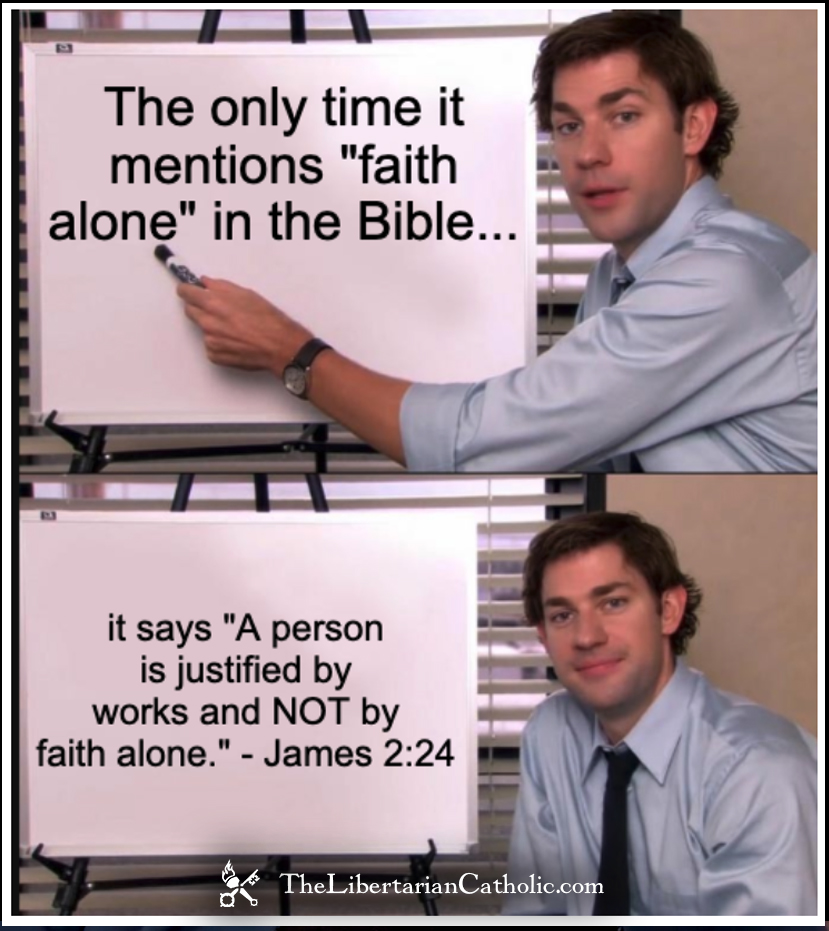
Thank you for your passionate words—there’s much scriptural truth here, and we share common ground on core realities.We fully agree that justification is by God’s grace alone. As the Catechism teaches, “Our justification comes from the grace of God” (CCC 1996)—it is utterly gratuitous, necessary for salvation, and nothing we do merits that initial grace. We also agree that we must assent to this grace through faith: justification involves “the acceptance of God’s righteousness through faith in Jesus Christ” (CCC 1991). That acceptance is faith itself.We likewise affirm that even our best attempts at righteousness, when done apart from God or in self-righteousness, are like “filthy rags” (Isaiah 64:6). Catholics are taught to approach everything—especially the sacraments—out of genuine love for God. Receiving Holy Communion in a state of mortal sin, for example, is gravely wrong.We agree that works without living faith are dead. Yet Scripture also teaches the reverse: faith without works is dead (James 2:22–26):
Seest thou, that faith did co-operate with his works; and by works faith was made perfect? And the scripture was fulfilled, saying: Abraham believed God, and it was reputed to him to justice, and he was called the friend of God. Do you see that by works a man is justified; and not by faith only? And in like manner also Rahab the harlot, was not she justified by works, receiving the messengers, and sending them out another way? For even as the body without the spirit is dead; so also faith without works is dead.
(Abraham’s faith was “made perfect” by his works, and Scripture was fulfilled in him.)
You likely agree that corporal works of mercy flow naturally from living faith. The key difference seems to be whether the Church’s rituals and sacraments count as legitimate expressions of that faith.Christ Himself teaches otherwise:
The Mass is not a mere human tradition that stifles the Spirit. It is the re-presentation of Christ’s one sacrifice on Calvary, allowing us to participate in His perfect obedience and offering. The Eucharist comes straight from Jesus’ command: “Do this in remembrance of me” (Luke 22:19). In it, the Holy Spirit transforms bread and wine into Christ’s Body and Blood, uniting us more deeply to Him and His Body.
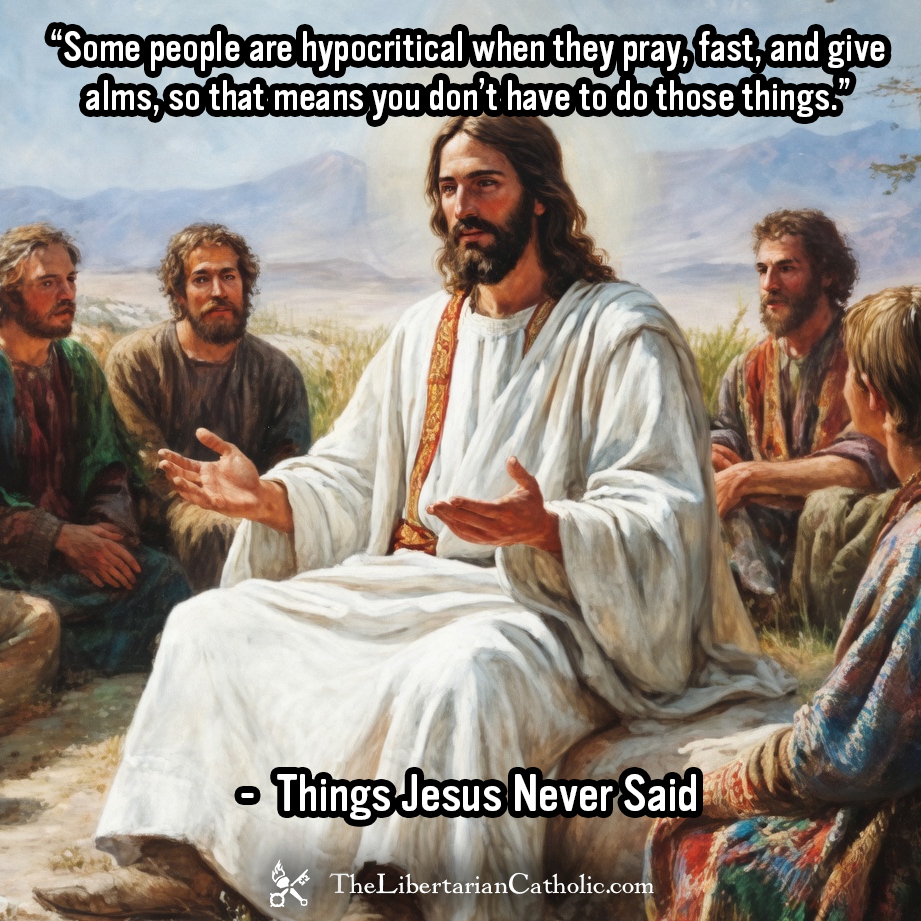
Prayer, fasting, and almsgiving are genuine spiritual works that manifest true faith. Christ warns against doing them hypocritically—”When you fast, do not look gloomy like the hypocrites” (Matthew 6:16, NABRE)—but He never says to stop fasting. Instead, He instructs how to do it rightly: in secret, before the Father. The same applies to prayer and almsgiving (Matthew 6:1–18). These are not optional; they express conversion toward God, self, and others.
The heart of the matter is that faith is not the end—it’s the beginning. As St. Paul says, what counts is “faith working through love” (Galatians 5:6). In Catholic understanding, everything from the Mass to daily acts of charity serves as a channel for grace, not a replacement for it. These are ways grace bears fruit in us, never substitutes for personal surrender to God. May the Lord draw us both closer to Him in truth and charity.
 The Libertarian Catholic