 The Libertarian Catholic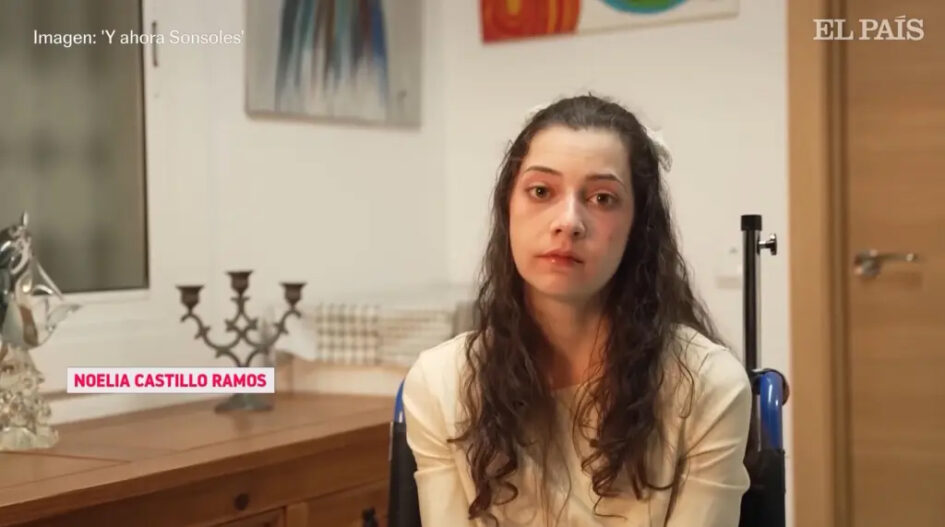
The tragic death of 25-year-old Noelia Castillo Ramos by euthanasia in Barcelona on March 26, 2026, stands as a stark illustration of the human cost when expansive state systems supplant personal responsibility, family authority, and genuine protective institutions. Noelia Castillo Ramos was left paraplegic after jumping from a fifth-floor window in a suicide attempt following a gang rape in a state-supervised facility for vulnerable youth. After a lengthy legal battle, she ultimately ended her life under Spain’s 2021 euthanasia law. Her case was not just a tragic medical decision; it was the inevitable culmination of repeated failures of the death cult of the state.
Noelia’s background reveals a pattern familiar in heavily interventionist welfare states. Born into a dysfunctional family marked by parental addiction and mental health issues, she entered the state “care” system at age 13. She struggled with psychiatric conditions, including diagnoses of obsessive-compulsive disorder and borderline personality disorder, and spent significant portions of her adolescence in institutional settings. In 2022, while residing in a government-run center for vulnerable youth, she was raped—reports describe it as a gang rape by three individuals, with some accounts suggesting unaccompanied migrant minors were involved. Traumatized, she attempted suicide shortly afterward—jumping from the fifth story—resulting in permanent paralysis from the waist down, chronic neuropathic pain, and incontinence. A second reported rape by an ex-boyfriend compounded her despair.
This sequence exposes the core mechanics of what critics identify as socialist governance in practice: the state assumes responsibility for the vulnerable through expansive social services, foster care, mental health systems, and supervised facilities, only to deliver inadequate protection, poor oversight, and inevitably: death. Instead of robust family preservation efforts, early intervention that strengthens natural support networks, or rigorous security in state institutions, the system placed a young woman in an environment where she was assaulted—allegedly by others the state itself was housing and supervising. Accountability for that failure remains opaque; the perpetrators’ identities and any disciplinary consequences for facility staff have received little public scrutiny.
When healthcare looks like mass murder, you might be living in socialism.
Spain, governed for years by left-wing coalitions including the PSOE and Unidas Podemos, has pursued a model of comprehensive state welfare, universal healthcare, and progressive social policies. The 2021 euthanasia law, passed along ideological lines with support from socialist and leftist parties, was framed as compassion and autonomy. Yet in Noelia’s case, it functioned as an exit ramp for a system that could neither prevent her initial trauma nor provide meaningful recovery or hope afterward. Rather than redoubling efforts on superior palliative care, psychological support, pain management, or community integration for the disabled, the state validated her despair and facilitated her death. Her father’s prolonged legal battle—supported by the conservative Christian lawyers group Abogados Cristianos—argued that her mental health conditions impaired her capacity for such an irreversible choice. Courts, including Spain’s Supreme Court and ultimately the European Court of Human Rights, sided with her “right to die,” prioritizing procedural autonomy over protection of the vulnerable.
Canadian Death Cult
This outcome aligns with patterns observed in other jurisdictions with similar welfare-heavy, progressive frameworks (Canada, the Netherlands and Belgium being prominent examples), where euthanasia criteria have expanded from terminal illness to chronic conditions, psychological suffering, and even cases involving younger or mentally ill individuals. What begins as a safeguard for the terminally ill can evolve into a normalized response to systemic shortcomings—poverty, isolation, inadequate care, or trauma the state failed to mitigate. In Spain, euthanasia requests have grown since legalization, concentrated in regions like Catalonia with strong public health bureaucracies. Critics argue this reflects not just individual choice but a cultural and institutional shift: when the collective “we” (via government) takes over caretaking roles traditionally held by family, church, and civil society, failures become collective liabilities best resolved quietly through death rather than reformed through accountability.
A parallel and even more dramatic example has unfolded in Canada, another nation with a deeply entrenched social-democratic welfare model featuring universal healthcare, extensive disability and social supports, and progressive governance. Since legalizing Medical Assistance in Dying (MAiD) in 2016, Canada has seen the practice explode from a narrowly intended option for the terminally ill into a routine cause of death. In 2024 alone, 16,499 Canadians died by MAiD—a 6.9% increase over 2023—accounting for 5.1% of all deaths in the country, or roughly one in every 20 deaths. Cumulative totals since legalization reached over 76,000 by the end of 2024, with projections pointing toward 100,000 cases by 2026. Earlier years saw even sharper growth: over 30% annual increases in some periods between 2019 and 2022.
Canada expanded eligibility in 2021 to include “Track 2” cases—individuals whose natural death is not reasonably foreseeable but who suffer from serious, incurable conditions or disabilities causing intolerable suffering. This opened the door wider for non-terminal patients, including those with chronic pain, frailty, diabetes, autoimmune disorders, or disabilities. Reports have documented cases where poverty, housing insecurity, loneliness, or fear of being a burden on family or the system factored into requests. Disability advocates and UN experts have raised alarms that inadequate community supports, long wait times for care, and gaps in mental health services push vulnerable people toward MAiD as a perceived solution to systemic shortcomings rather than true autonomy.
The growth occurred despite (or alongside) Canada’s vaunted single-payer healthcare system and generous social safety net—precisely the institutions meant to protect the vulnerable under a socialist-leaning framework. Instead of addressing root failures in long-term care, affordable housing, or robust disability supports, the state normalized death as an administratively efficient “compassionate” option. Critics note instances of veterans and disabled individuals being offered MAiD by officials when seeking other forms of help. Plans to further expand MAiD in 2027 to cases where mental illness is the sole underlying condition (temporarily delayed) have sparked fierce debate, with some provinces like Alberta pushing back to limit access and protect those with psychiatric conditions.
Canada provides the clearest contemporary warning of this trajectory. In a nation long committed to expansive social democracy, universal healthcare, and generous welfare programs, Medical Assistance in Dying (MAiD) has skyrocketed since its 2016 legalization. By the end of 2024, a total of 76,475 Canadians had died through the program. In 2024 alone, 16,499 individuals—representing 5.1% of all deaths in the country, or roughly one in every 20—received MAiD, a figure that continues to normalize euthanasia as a routine response to suffering. What began as a limited measure for the terminally ill has expanded to include those with chronic disabilities, incurable conditions, and—pending further implementation in 2027—potentially mental illness as the sole underlying factor. Reports of individuals citing poverty, loneliness, or inadequate housing as contributing factors underscore how systemic shortcomings in the very welfare state meant to uplift people can instead steer them toward state-facilitated death.
When Healthcare Looks Like Democide
Noelia’s case in socialist-leaning Spain, with its own growing euthanasia regime, fits the same mold: the state housed her in a facility where she was gang-raped, failed to deliver meaningful healing or protection afterward, and ultimately approved lethal injection when her suffering—partly of its own making—became inconvenient to manage. Her father’s opposition, rooted in the belief that life retains inherent value despite pain, was overruled by courts prioritizing procedural “rights” over preservation.
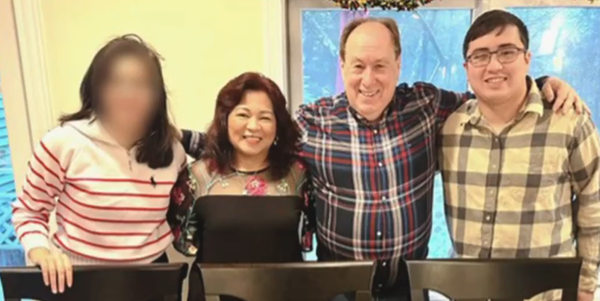
Noelia herself expressed exhaustion in final interviews: “I just cannot go on anymore.” A close friend attempted a last-minute intervention. Her mother said goodbye; her father opposed the decision to the end, questioning why the state would not prioritize preserving her life. The euthanasia occurred in a public assisted-living facility—the same ecosystem that housed her post-injury. The state, having placed her in harm’s way, approved her exit, and administered the lethal injections.
Here lies the bitter irony at socialism’s core. Promising solidarity, equality, and care for the weakest, it delivers the most anti-social outcome imaginable: the state, acting in the name of compassion and collective responsibility, becomes the arbiter that quietly eliminates its failures rather than confronting them. Families are sidelined, civil society institutions marginalized, and the intrinsic dignity of human life subordinated to bureaucratic efficiency and ideological notions of autonomy. Suffering is not alleviated through renewed investment in palliative excellence, family strengthening, or accountability for institutional lapses; it is ended with a needle.
Socialism, in practice, reveals itself as the death cult of the state. Its highest expression of “care” for the broken is not restoration or accompaniment, but termination. Noelia Castillo deserved better than to be failed by the system from youth onward, only to have that same system hand her the means of her own end. So does everyone around the world subject to the death cult of the state.