 The Libertarian Catholic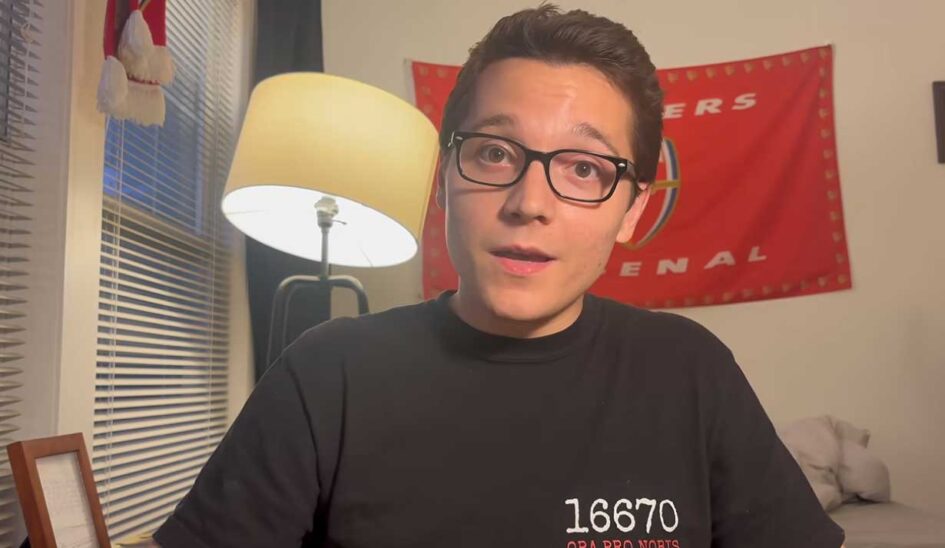
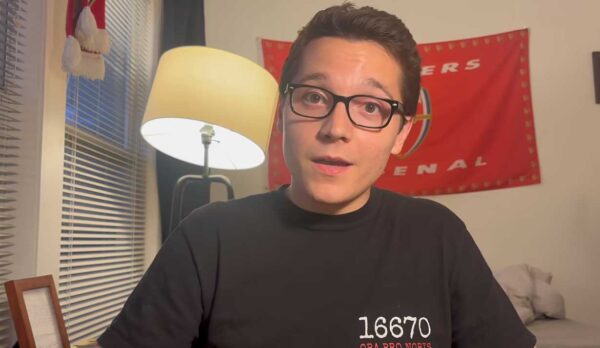
On August 21, 2026, Joseph (Joe) Schmid—PhD student in philosophy at Princeton University and host of the popular YouTube channel Majesty of Reason—published a roughly 28-minute video titled “I just converted to Catholicism. Here’s my story.” The video quickly surpassed 100,000 views and became the channel’s most-watched upload. In it, Schmid opens bluntly: “Big news. God exists. Christ is Lord, and he established the Catholic Church. I’m not kidding. I just converted to Catholicism.”
Schmid, long known in online philosophy of religion circles as a rigorous, often critical agnostic who engaged theistic arguments with careful scrutiny, described the shift as both an intellectual and a personal transformation. He framed it as a genuine conversion—a change of mind and heart—rather than a mere “revert,” even while acknowledging his Catholic upbringing.
Early life and deconversion
Schmid grew up in a devout Catholic household and attended private Catholic school from kindergarten through 12th grade. He fully believed and practiced the faith as a child. Doubts began in seventh or eighth grade when he studied evolutionary theory. The idea of hundreds of millions of years of animal suffering, predation, and death under a supposedly all-loving, providential God struck him as deeply problematic. This “evolutionary argument from evil” intensified the classic problem of evil for him.
He began watching online debates featuring New Atheists such as Sam Harris and Richard Dawkins. Objections to theism and Christianity accumulated until he lost his faith, moving through atheism into a period of confident naturalism by around tenth grade. By his senior year of high school, however, exposure to Christian philosopher Josh Rasmussen’s Worldview Design channel and related arguments (including contingency and fine-tuning considerations) led him to abandon confident naturalism. He became an agnostic who suspended judgment: he could no longer rule out God’s existence, yet remaining barriers kept him from affirming theism.
Philosophical path toward theism
In the years that followed, Schmid continued producing detailed content analyzing arguments for and against God, classical theism, and related metaphysical issues. He came to view theism as a relatively simple, coherent, non-arbitrary, and elegant hypothesis that offered a unifying explanation for a wide range of striking data—fine-tuning of the cosmos, contingency, and more. One argument that later featured prominently in discussions of his journey is the problem of psychophysical (or psychonomic) harmony: the surprising alignment between physical states, the laws that govern them, and the phenomenal/conscious states that pair with them in rationally coherent and fortunate ways. This line of thought, which Schmid has developed in academic work, contributed to weakening naturalism’s explanatory power in his mind.
Even as philosophical considerations made theism more attractive, significant roadblocks remained—especially regarding specific Christian and Catholic claims.
The decisive role of miracle evidence
What ultimately shifted Schmid’s position, according to his testimony, was an intensive engagement with evidence for miracles, particularly those with strong documentation and apparent implications for distinctively Catholic doctrines. He highlights:
- Marian apparitions such as Our Lady of Zeitoun (Egypt), Fatima, and Lourdes, including associated healings (some medically documented) and, in the case of Zeitoun, mass public witnesses.
- Eucharistic miracles, including cases subjected to blinded laboratory analyses.
- The life and mystical phenomena associated with St. Padre Pio (stigmata, bilocation, and other charisms). Schmid describes a roughly four-hour conversation in February 2026 with Catholic apologist Ethan Muse focused on the evidence for Pio’s gifts as especially pivotal.
- Other medically attested healing miracles and related phenomena.
Schmid states that the cumulative picture made it appear as if “the universe was conspiring to make it look like God exists, God is performing certain miracles, and not just miracles, but miracles that seem to vindicate distinctive Catholic doctrines.” He concluded that these events carried “vindicatory implications” for Catholicism, as if God were placing a stamp of approval on its claims. Remaining a non-Catholic, he said, would require positing not merely one conspiracy but “a conspiracy of conspiracies” to explain away the evidence. He was unwilling to “bet [his] soul” on that.
Change of heart and the final step
Intellectual conviction was accompanied by a change of heart, catalyzed by the witness of the saints. Schmid specifically mentions being moved by the story of St. Maria Goretti (the young martyr who forgave her attacker) and the example of St. Maximilian Kolbe. These accounts created what he describes as a “magnetic pull” or attraction to Catholicism.
The day after his extended discussion with Muse, Schmid performed a thorough examination of conscience covering his decade away from the faith. The following day he made a general confession. He has since affirmed the Catholic faith.
Reception and context
The announcement generated widespread discussion across Catholic, Protestant, and skeptical communities. Catholic voices largely celebrated it as a significant return of a thoughtful public intellectual. Some Protestant commentators welcomed the move toward Christian theism while raising doctrinal concerns about Catholicism. Skeptics and former interlocutors expressed surprise and, in some cases, disappointment or requests for deeper engagement with historical-critical issues surrounding the miracle claims.
Schmid’s video is partly autobiographical and partly persuasive. He notes minor points of clarification (for example, regarding the precise doctrinal implications of certain apparitions) and emphasizes that conversion involves both intellect and will. As a philosopher known for careful argument, his public embrace of Catholicism has drawn particular attention precisely because of his prior track record of rigorous critique.
Schmid continues his academic work at Princeton and his online philosophy content. His story, as told in the video, centers on the cumulative force of philosophical arguments for theism combined with what he judges to be unusually strong historical and empirical evidence for miracles that specifically support Catholic claims—evidence he ultimately found more compelling than the remaining objections.