 The Libertarian Catholic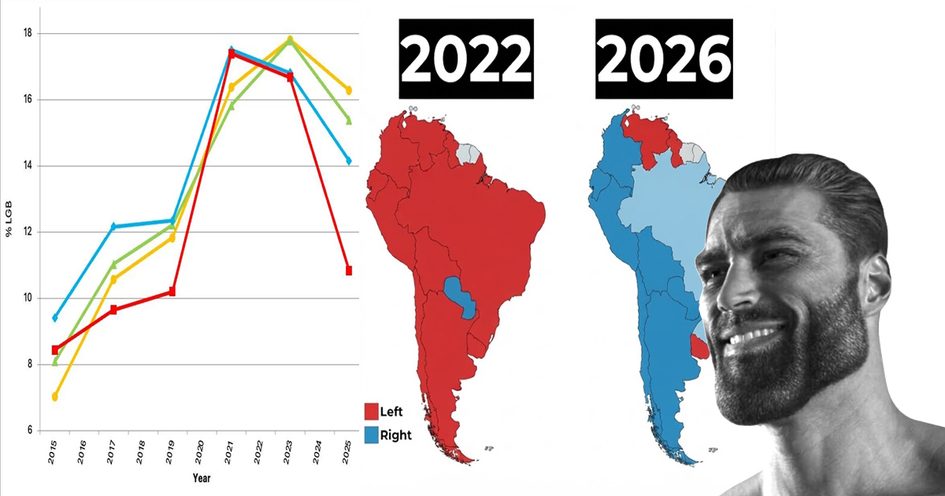
In early 2025, the second Trump administration froze most U.S. foreign assistance and moved to dissolve or sharply curtail the U.S. Agency for International Development (USAID). By March 2025, roughly 83% of USAID programs (about 5,200 contracts) had been canceled. Remaining functions were largely absorbed into the State Department. Officials cited waste, misalignment with U.S. interests, and spending on diversity, equity, and inclusion (DEI) initiatives, climate projects, and LGBT-related programs as reasons for the cuts KFF timeline.Critics of the agency had long pointed to examples of contested spending, including grants for LGBT activism abroad and other non-core priorities. Supporters emphasized USAID’s historical role in health, humanitarian aid, and development. Independent analyses later linked the abrupt reductions to disruptions in HIV treatment, nutrition programs, maternal health services, and disease surveillance in multiple countries, with estimates of excess deaths ranging from hundreds of thousands annually in modeling studies (AP; CGD).
Declines in Youth LGBT IdentificationA separate trend appeared in U.S. Centers for Disease Control and Prevention (CDC) Youth Risk Behavior Surveillance System data. Psychologist Jean Twenge’s analysis of 2025 figures showed a sharp drop in the share of young teenagers identifying as lesbian, gay, or bisexual compared with a few years earlier. The decline was especially pronounced among ninth-grade girls: from about 30% identifying as lesbian or bisexual in 2021 to 17% in 2025. Bisexual identification among those girls fell from 26% to 13%. Rates of boys identifying as gay remained relatively stable over the prior decade Townhall summary of Twenge/WaPo data.
Twenge described the change as a “free fall” whose causes are unclear. The downward trend in the data had roots during the Biden administration and continued afterward. Some conservative commentators linked the acceleration to the dismantling of USAID and related reductions in domestic education and cultural programs, arguing that reduced external promotion of certain identities contributed to the shift. No rigorous causal study has established that USAID funding levels directly drove U.S. youth identification rates. Identification surveys measure self-reported labels, which can fluctuate with social trends, peer influence, media exposure, and survey methodology.USAID had previously funded international LGBT rights, health, and advocacy programs. Their termination reduced support for such organizations in many countries, according to reports from affected groups (Advocate; Williams Institute). Domestic U.S. identification trends, however, are not primarily governed by foreign-aid budgets.
Latin America’s Rightward Electoral ShiftIn Latin America, several countries moved away from left-leaning governments that had formed part of the early-2020s “pink tide.” In mid-2026, right-wing candidates won narrow presidential victories in Colombia and Peru. Abelardo de la Espriella defeated the leftist candidate backed by outgoing President Gustavo Petro in Colombia. Keiko Fujimori secured a razor-thin win in Peru. These results followed earlier rightward turns in Argentina (Javier Milei), Chile (José Antonio Kast), Ecuador, and elsewhere (USA Today; Reuters).Analysts attribute the shift primarily to voter frustration with crime, organized-crime violence, inflation, and economic underperformance under prior leftist administrations, rather than to any single external funding decision. De la Espriella and others campaigned on security, economic liberalization, and closer ties with the United States. President Trump publicly endorsed several of the successful right-leaning candidates and framed U.S. policy around reasserting influence in the Western Hemisphere.
Left-leaning governments in the region had varied records; some faced accusations of tolerance toward illicit networks or policy failures on public safety. The new administrations are not uniform—ranging from libertarian-leaning to more traditional conservative platforms—and face their own governance challenges, including fiscal constraints and divided legislatures.Assessing the Broader PictureUSAID’s reduction removed substantial U.S. funding from global health, humanitarian, environmental, and governance projects. Documented consequences include clinic closures, medicine stockouts, elevated malnutrition risks, and setbacks in disease control in multiple low-income countries.
Modeling from organizations such as the Center for Global Development has estimated large potential mortality impacts, though exact attribution remains debated and data collection itself was disrupted by the cuts.Claims that the world became “literally less gay and communist” after the cuts oversimplify complex phenomena. Self-reported sexual orientation among U.S. teens declined in specific subgroups for reasons that researchers have not fully explained. Latin American electorates shifted rightward largely in response to domestic security and economic conditions. USAID’s previous support for certain advocacy and identity-focused programs ended, and some political actors celebrated the removal of what they viewed as ideological spending. At the same time, the agency’s core humanitarian and health work had measurable effects on mortality and living standards that independent trackers continue to quantify.Funding priorities reflect policy choices. The 2025–2026 changes represent a sharp reorientation of U.S. foreign assistance away from the previous model. Observable outcomes include lower rates of certain youth identity labels in U.S. survey data, electoral gains for right-leaning parties in parts of Latin America, and significant disruptions to aid-dependent health and relief systems overseas. Causal links between the funding cuts and each of these trends vary in strength and remain subjects of ongoing analysis.