 The Libertarian Catholic
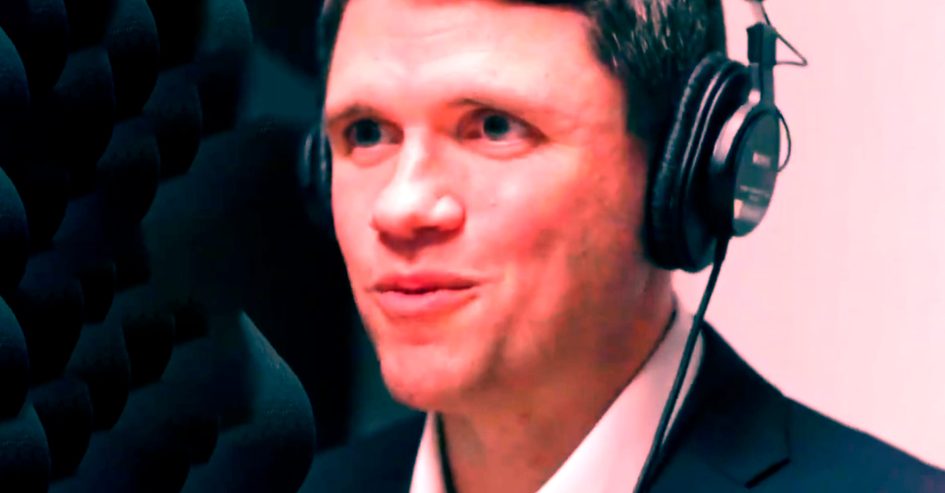
In a recent monologue, Texas politician and seminarian James Talarico begins by noting that prominent historical figures infused their politics with religion. He points to Thomas Paine’s Common Sense and Martin Luther King Jr., both of whom drew on Christian language and moral energy to advance their public causes. So far, this is familiar ground: people of faith have long allowed their deepest convictions to shape how they engage the political realm.
Talarico then expands the point. Everyone is religious, he argues. Donald Trump’s religion is money, power, and status; Talarico says he puts his faith in love. This observation is not new. Thoughtful observers have long noted that every person worships something—an ultimate concern that organizes their life and demands loyalty. Atheists are no exception; they simply transfer ultimate allegiance to other objects, whether humanity, progress, the self, or material success. Up to this point, Talarico’s analysis tracks with a basic truth about human nature. Indeed, he sounds very Christian.
Then comes the bait and switch.
Talarico starts by describing people who bring their preexisting religion into politics. He ends by elevating politics itself into a religion. Politics, he insists, could be treated “as a sacrament.” The goal is an “incarnational politics” that treats every person as sacred, holy—and, in his own words, as “god.” What begins as an observation about faith shaping politics becomes a proposal that politics itself become the sacred frame through which we encounter the divine, which to Talarico is every person.
This is the philosophy of Jean-Jacques Rousseau’s civil religion. In The Social Contract, Rousseau argued that no durable political order can exist without a shared religious foundation that binds citizens to the state and to one another. Traditional Christianity, he believed, was unsuitable because it directed loyalty upward to a transcendent God and outward to a Church that could stand in tension with the sovereign. What was needed instead was a simplified public creed—belief in a providential deity, the afterlife, the rewards of virtue and punishments of vice, and the sanctity of the social contract itself—enforced by the state. Private beliefs could be tolerated only so long as they did not undermine civic unity. The state, not the churches, would define the outer limits of acceptable devotion.
So, what’s the problem with a civil religion? It sounds great, right?
The problem is that Rousseau’s ideas helped shape the ideological atmosphere of the horrors of the French Revolution. The revolutionaries attempted to replace Christianity with a secular civic cult: literally the Cult of Reason, the Cult of the Supreme Being, the dechristianization campaigns, the confiscation of Church property, the execution or exile of clergy, and the Reign of Terror. When the political order becomes the highest object of reverence, those who refuse to bow are not merely political opponents; they become enemies of the sacred. The fruits were blood, not brotherhood.
Talarico professes to be a Christian. Yet the framework he advances is deeply anti-Christian. Christianity insists on a sharp distinction between Creator and creature, between the City of God and the City of Man. No earthly order is ultimate. The Church exists in tension with every political power, and ultimate loyalty belongs to a God who stands outside and above every human system. By making politics the sacrament and the political community the primary site of the sacred, Talarico inverts that order. The fruits of such a philosophy will necessarily resemble the fruits of Rousseau’s: coercion justified in the name of higher virtue.
Talarico dresses his civil religion in the Christian language of love. This sounds attractive. Love of neighbor is a genuine Christian command. But any political religion that sacralizes the state or a particular political vision is the opposite of love. There is no benevolence in giving away other people’s money and everything the government has to give away is taken through force from someone else. As we saw in the French Revolution and throughout history, civil religions may ostensibly promote love within the cult, but necessarily produce hatred toward those who will not worship its false god. Dissent to the state ceases to be legitimate political disagreement and becomes impiety or blasphemy. The French Revolution illustrated the pattern with brutal clarity: the Church that refused to submit was marked for destruction.

You cannot love through coercion, and that is the fatal flaw of the “bake my damned cake” argument. When activists demand that the state force a baker, florist, or photographer to create or participate in an event that violates their conscience, they are not seeking love, respect, or genuine neighborliness; they are seeking submission enforced by the state’s monopoly on violence. Government is coercion by definition—laws are ultimately backed by the threat of fines, seizure of property, or imprisonment. Authentic love, by contrast, requires freedom: the liberty to choose, to give or withhold, to act from conviction rather than compulsion. As the Christian tradition and any coherent account of human dignity recognize, there is no love without freedom, because love that is extracted under threat is not love at all—it is compliance. Forcing someone to act against their deepest beliefs does not create solidarity; it breeds resentment and hollow ritual. True charity and mutual respect can only arise where people remain free to say yes or no.
The clearest tell is Talarico’s theology of the person. Everyone is sacred. Everyone is holy. “Every person is god.”
To hopeful ears this may sound warm and inclusive and explicitly Christian. After all, St. Athanasius of Alexandria famously wrote that God became man so that man might become God. That is the classic Christian understanding of theosis or deification: through union with the incarnate Son, by grace, human beings are adopted as sons and daughters and share in the divine life. The goal is communion with the living God.
But it is an entirely different claim to assert that every person already is God by nature. The Christian tradition carefully preserves the Creator–creature distinction. Human beings bear the image of God and possess real dignity; they are not themselves divine.
The claim that every person is God by nature echoes the first temptation in the Garden: “You will be like God” (Genesis 3:5). That was the original lie—the promise of divinity independent the true God. When a political vision absorbs that lie, it ceases to be Christianity and becomes something closer to Satanism.
Talarico’s “incarnational politics” does not deepen Christian faith. It replaces it with a civil religion clothed in Christian vocabulary. The result is not the elevation of politics by the Gospel, but the subordination of the Gospel to politics. History shows where that road leads.
The rhetorical move is elegant and ambitious. It universalizes the language of incarnation and holiness, detaching it from any particular creed so that progressive socialist commitments—especially care for the neighbor, the poor, and the marginalized—can claim the full emotional and moral force once reserved for revealed religion. Socialism becomes a liturgical act. Treating people as ends rather than means becomes sacramental. And the Death Cult of the State becomes the official religion forced on every citizen.