 The Libertarian Catholic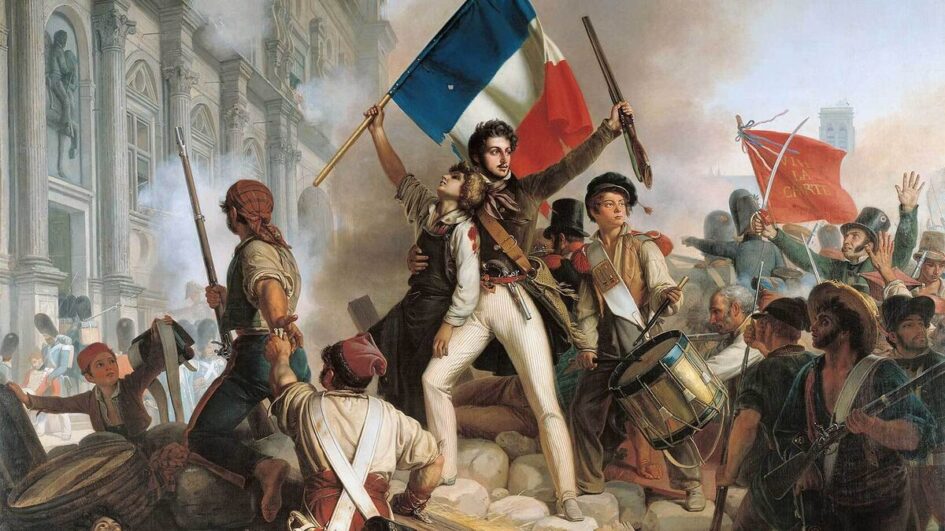
The French Revolution of 1789 is often celebrated as the birthplace of modern democracy, liberty, equality, and fraternity. Yet beneath the rhetoric of Liberté, Égalité, Fraternité lay deeper currents of radical egalitarianism, class warfare, centralized state power, and the explicit rejection of private property that prefigured 19th- and 20th-century communism. While not a fully formed Marxist revolution—Karl Marx was born decades later—it served as a proto-communist laboratory: a violent upheaval that mobilized the masses against “oppressors,” experimented with wealth redistribution and terror, and inspired later revolutionaries who saw it as the first act in a drama culminating in the dictatorship of the proletariat.
From Bourgeois Revolt to Radical Egalitarianism
The Revolution began with legitimate grievances: an absolutist monarchy, aristocratic privileges, crushing taxes on the Third Estate, and economic hardship exacerbated by poor harvests. The National Assembly’s early reforms—abolishing feudalism, declaring the Rights of Man, and limiting royal power—reflected classical liberal influences from Locke, Montesquieu, and the American Founding.
But the radical phase quickly eclipsed this. The Jacobins, under Maximilien Robespierre, transformed the Revolution into a totalist project. The Committee of Public Safety wielded dictatorial power. The Reign of Terror (1793–1794) executed tens of thousands—aristocrats, clergy, moderates, and eventually fellow revolutionaries—via the guillotine. This wasn’t mere defense against counter-revolution; it was ideological purification to enforce “virtue” and equality. Robespierre’s rhetoric echoed later communist language: the people versus enemies of the people, with the state as the instrument of redemption.
Economic policies pointed further left. Price controls (Maximum), forced requisitions of grain, dechristianization campaigns, and proposals for land redistribution to the poor attacked property rights. The levée en masse militarized society. These measures treated private property and traditional institutions as obstacles to the general will (a Rousseauian concept that justified coercion in the name of collective good).
Babeuf and the Conspiracy of the Equals: Explicit Proto-Communism
The Revolution’s most direct communist thread emerged late, in the Directory period. François-Noël Babeuf, known as Gracchus Babeuf, led the Conspiracy of the Equals in 1796. He and his followers explicitly called for the abolition of private property, communal ownership of goods, and absolute equality—not mere legal or political equality, but material equality enforced by the state.
Babeuf’s newspaper Le Tribun du Peuple agitated for a popular revolt to establish a socialist republic. He drew on Jacobin radicalism but pushed beyond it, influenced by utopian thinkers like Morelly while adding a class-struggle element. The conspiracy planned to seize power, redistribute wealth, and create a society without “mine and thine.” Though foiled and resulting in Babeuf’s execution, it was hailed by Marx and Engels as “the first appearance of a truly active Communist party.” Engels called Babeuf the origin of modern communism in France.
This was no fringe anomaly. It built directly on the Revolution’s logic: if sovereignty resides in the people, and equality is the highest good, then private property and individual rights become negotiable—or expendable.
Parallels to Later Communism
The structural similarities are striking:
- Class Warfare and Enemies of the People: Jacobins pitted sans-culottes against aristocrats and “hoarders.” Bolsheviks pitted proletarians against kulaks and bourgeoisie. Both used show trials, purges, and propaganda.
- Centralized Terror: The Revolutionary Tribunal and guillotine prefigured the Cheka and Gulag. Lenin explicitly studied the French model and admired the Jacobins’ ruthlessness.
- Utopian Engineering: Attempts to remake society—new calendar, cults of Reason/Supreme Being, metric system, and suppression of the Church—mirrored Soviet efforts to create “New Soviet Man.”
- Influence on Marx: Marx viewed the French Revolution as the bourgeois revolution par excellence but saw its radical edge (especially Babouvism) as containing the seeds of proletarian revolution. He and Engels positioned scientific socialism as the heir to these “rough” communist stirrings.
Conservatives like Edmund Burke warned early on that the Revolution’s abstract principles and destruction of organic society would lead to tyranny and chaos—prophecies vindicated not just by Napoleon but by the ideological descendants in the 20th century.
Counterarguments and Nuance
Critics rightly note that the Revolution was not uniformly communist. Many leaders were classical liberals or republicans defending property. The Jacobins defended small property against large estates, and Babeuf’s movement was suppressed. The ultimate victor was Napoleon, who restored hierarchy and property rights under a new authoritarianism.
Mainstream historiography often downplays the radical threads to preserve the Revolution as a liberal triumph. Revisionists and some on the right argue it was a bourgeois power grab with unfortunate excesses. Yet ignoring the proto-communist elements sanitizes history. The Revolution’s failure to deliver stable liberty—ending in terror, war, and dictatorship—highlighted the dangers of unchecked egalitarianism, a lesson repeated in Russia, China, Cambodia, and elsewhere.
Legacy: A Warning or Inspiration?
The French Revolution demonstrated that revolutions justified by “the people” and equality often devour their own and concentrate power in a new elite. It birthed modern ideological politics: left vs. right, with the left increasingly defined by hostility to tradition, property, and intermediary institutions.
Today, echoes persist in debates over wealth taxes, identity-based redistribution, cancel culture as secular terror, and centralized solutions to inequality. Understanding the Revolution as proto-communist doesn’t mean rejecting all its achievements—like legal equality and the end of absolute monarchy—but demands skepticism toward its messianic promises.
The guillotine’s shadow reminds us: when equality trumps liberty and property, the result is rarely fraternity. It is often the blade.