 The Libertarian Catholic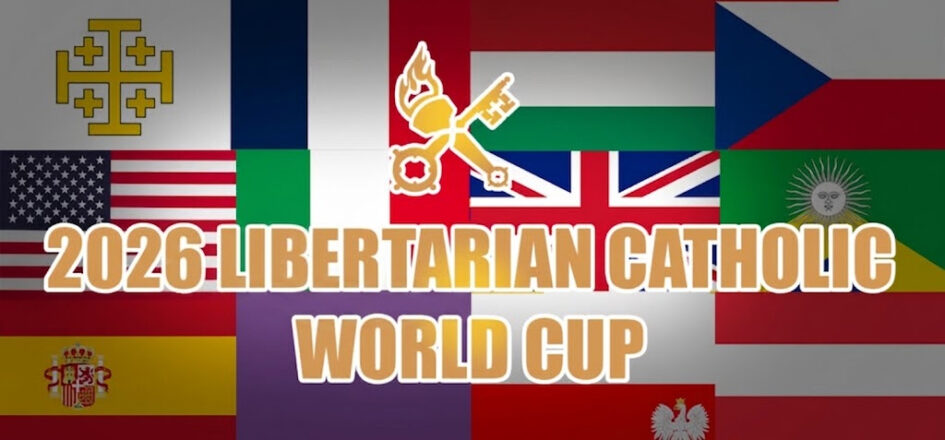
Welcome to the 2025 Libertarian Catholic World Cup! Who will win? Here are the rules:
- Fill out the bracket below and click “Save Picks” then input your email.
- Vote for your picks as the polling begins on each FB post
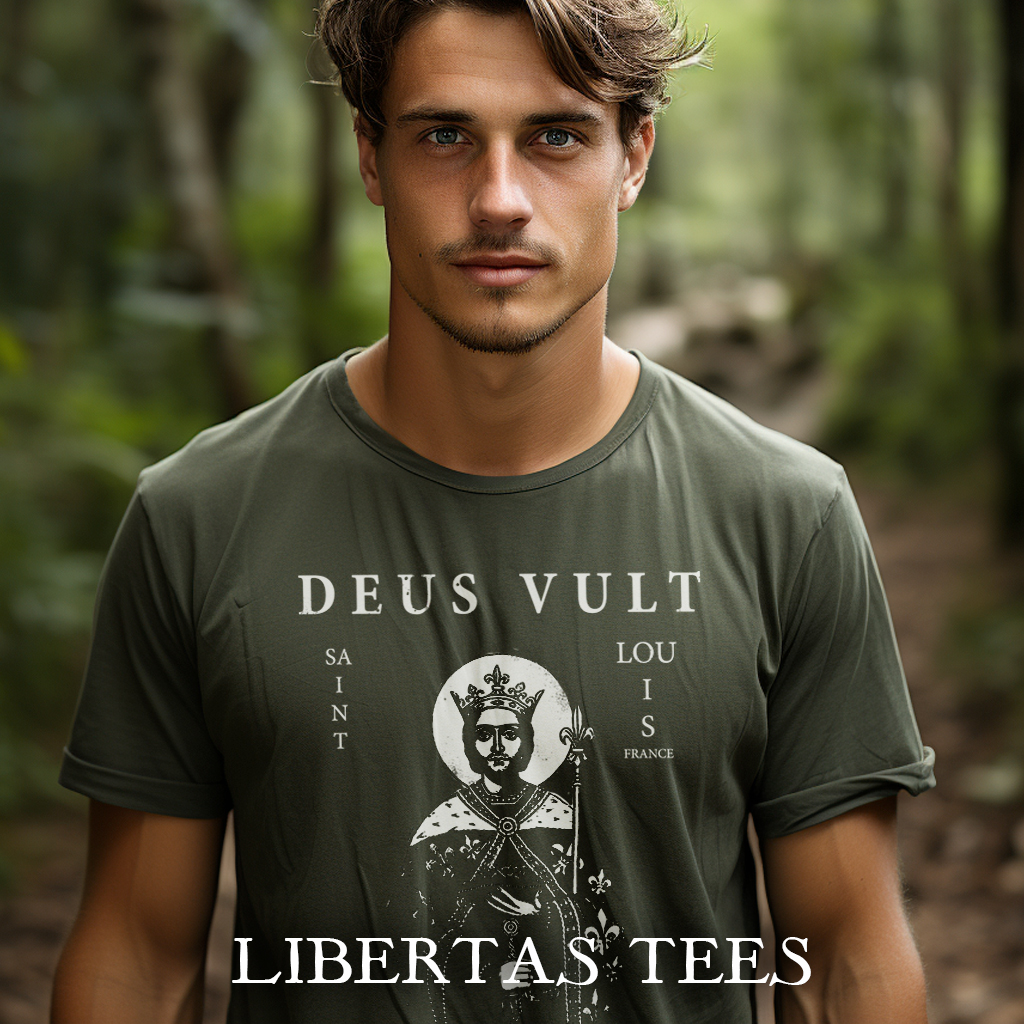
- Winners will win their choice of any T-shirt on Libertas Tees
1. Poland
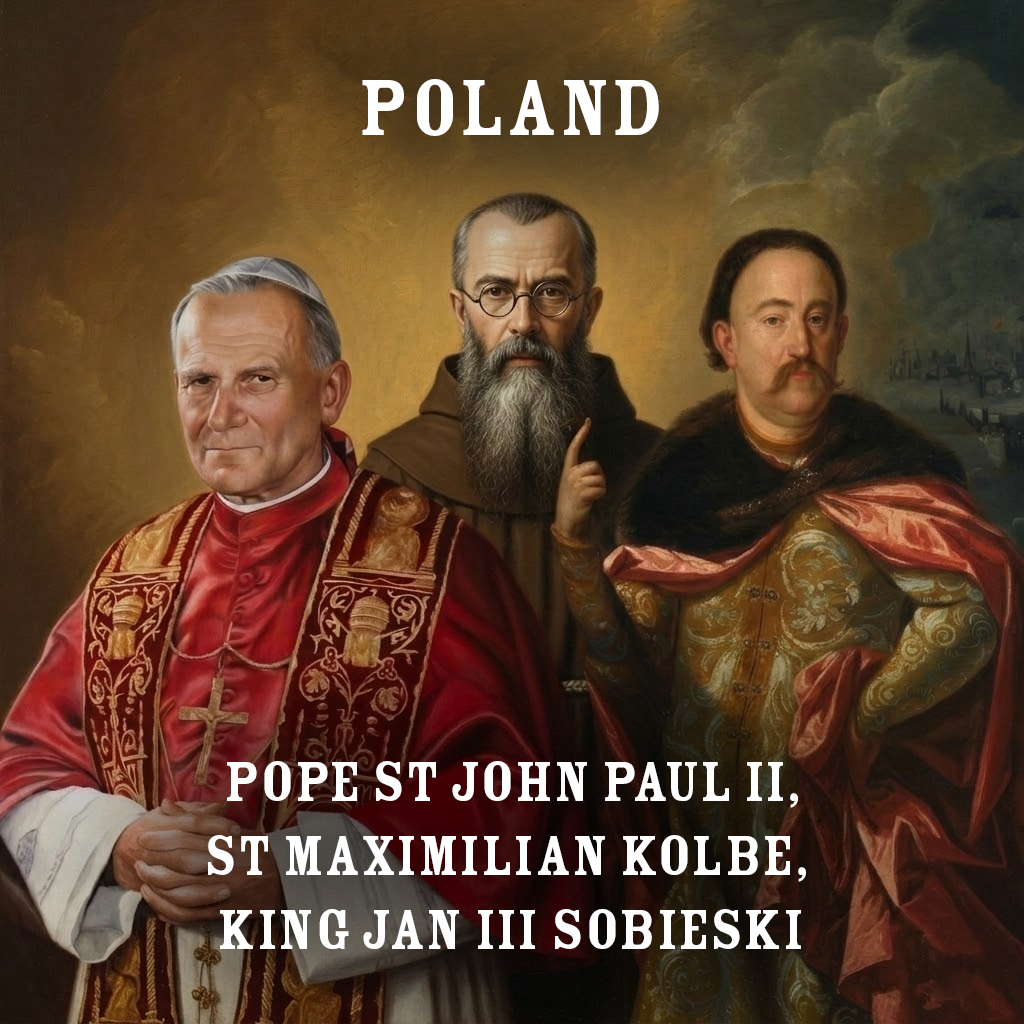
Captain: Pope John Paul II Pope St. John Paul II (1920–2005): Defender of human dignity, Solidarity movement, and freedom against communism. “Do not be afraid!” Champion of truth, conscience, and the dignity of the person over totalitarian power.
St. Maximilian Kolbe: Martyr of charity in Auschwitz. Founded Militia Immaculata; used media for truth against totalitarianism. King Jan III Sobieski: Savior of Vienna from Ottoman siege. Defender of Christendom and European liberty. Jerzy Popiełuszko: Priest-martyr. Chaplain to Solidarity; preached truth against communist lies. Cardinal Stefan Wyszyński: Primate who resisted communism, protected Church, and supported workers. St. Faustina Kowalska: Apostle of Divine Mercy. Her diary promotes trust in God’s mercy and personal conversion. Lech Wałęsa: Leader of Solidarity. Electrician-turned-president who helped topple communism through non-violent resistance.
2. Asia Minor
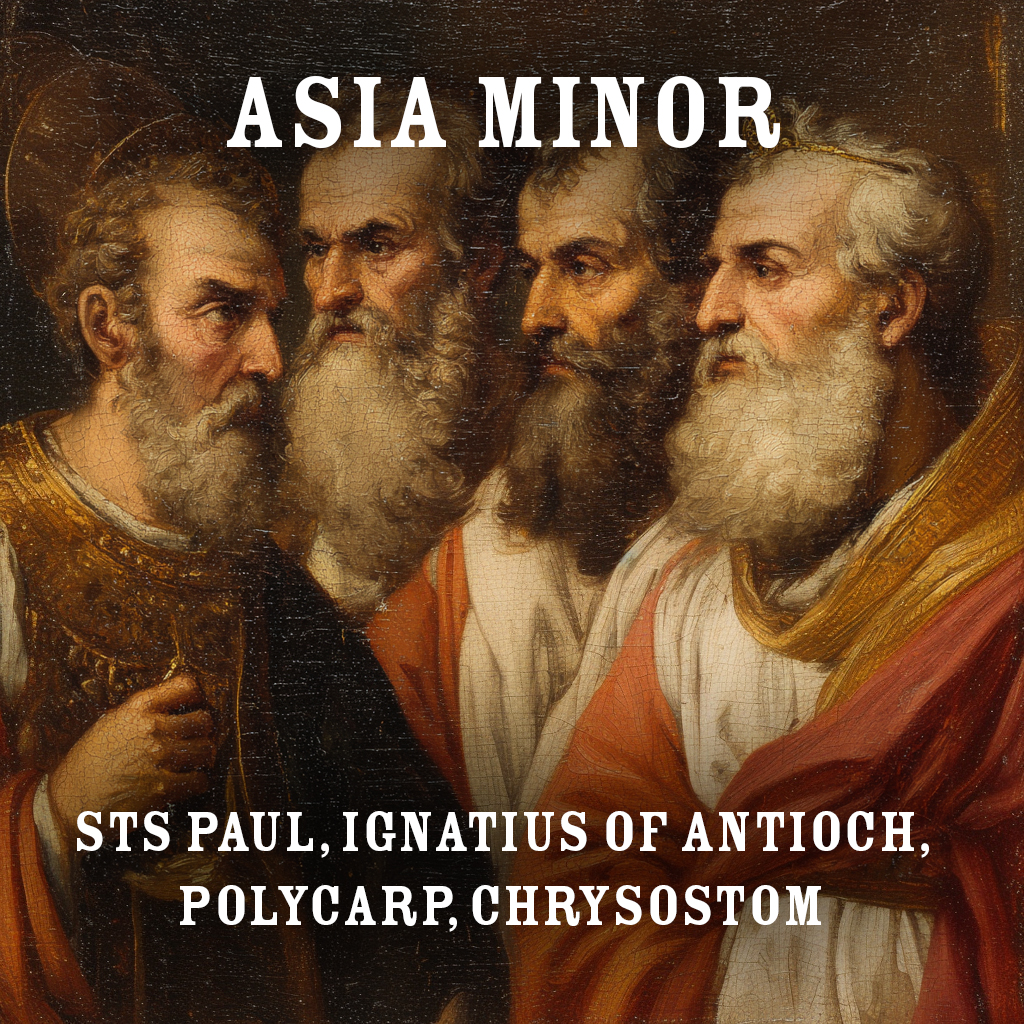
Captain: St. Paul (c. 5–67): Apostle to the Gentiles. “For freedom Christ has set us free.” Proclaimed equality in Christ, natural law in Romans, and conscience against unjust power.
St. Ignatius of Antioch: Martyr bishop. Emphasized Church unity and Eucharistic faith; letters stress ordered liberty under Christ. St. Polycarp: Disciple of John, martyr. Model of steadfast fidelity: “Eighty and six years I have served Him, and He has done me no wrong.” St. John Chrysostom: Golden-mouthed preacher. Denounced wealth hoarding and injustice; advocated almsgiving and moral reform. St. Basil the Great: Defender of Trinitarian doctrine, monastic founder. Promoted communal charity while respecting personal responsibility. St. Gregory of Nazianzus: Theologian. Contributed to Cappadocian synthesis; emphasized human dignity as image of God. St. Nicholas: Bishop, gift-giver. Protector of the innocent and poor; legendary defender against tyranny.
3. England
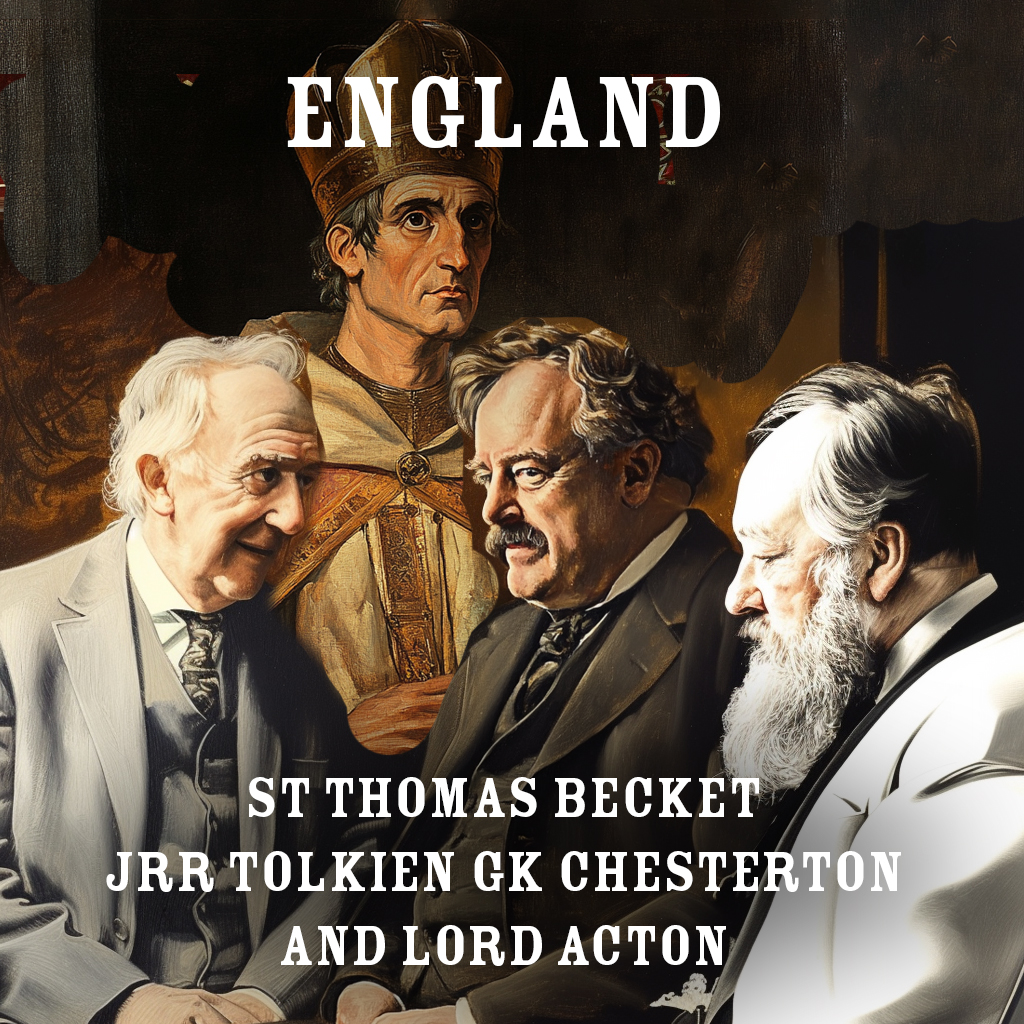
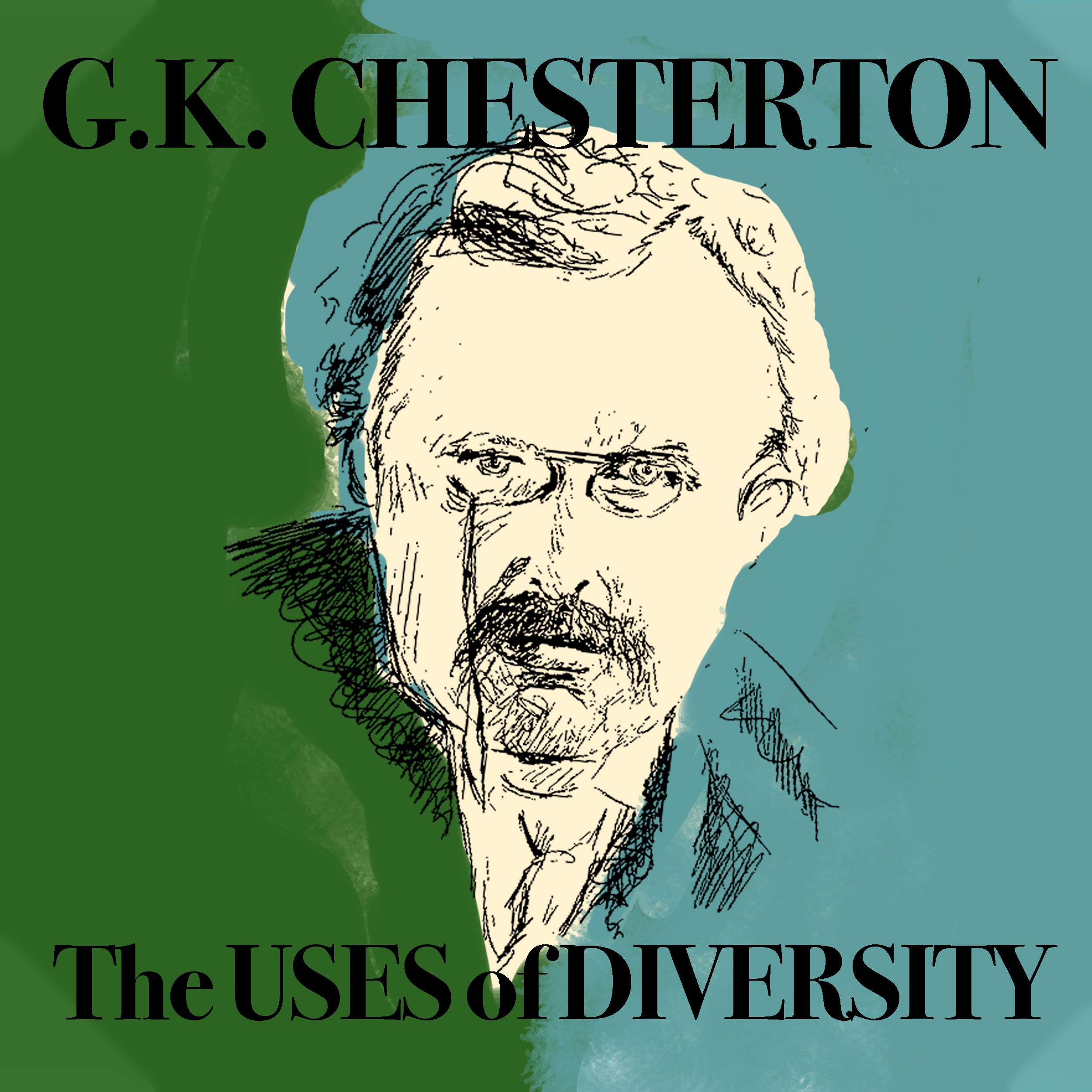
Captain: G. K. Chesterton G. K. Chesterton (1874–1936): Apologist, distributist. Celebrated distributed property, wonder, and orthodoxy against statism and modernism.
J. R. R. Tolkien: Author of Lord of the Rings. Subcreated worlds warning against power concentration and industrial tyranny; Catholic traditionalist. St. Thomas Becket: Martyr archbishop. Defended Church liberties against royal overreach. Lord Acton: Historian. “Power tends to corrupt, and absolute power corrupts absolutely.” Advocate of liberty and conscience. St. Thomas More: Martyr, Lord Chancellor. “The King’s good servant, but God’s first.” Opposed tyranny. St. John Henry Newman: Convert, cardinal. Emphasized conscience and education. St. Bede: Often called the “Father of English History”, this Northumbrian monk wrote the Ecclesiastical History of the English People. He is the only Englishman to be named a Doctor of the Church. St. Cuthbert: An Anglo-Saxon bishop and hermit, he is one of the most venerated medieval saints of Northern England. His beautifully preserved relics remain housed in the magnificent Durham Cathedral. Sir Roger Bacon: Doctor Mirabilis developed the precursor to the scientific method.
4. Holy Land
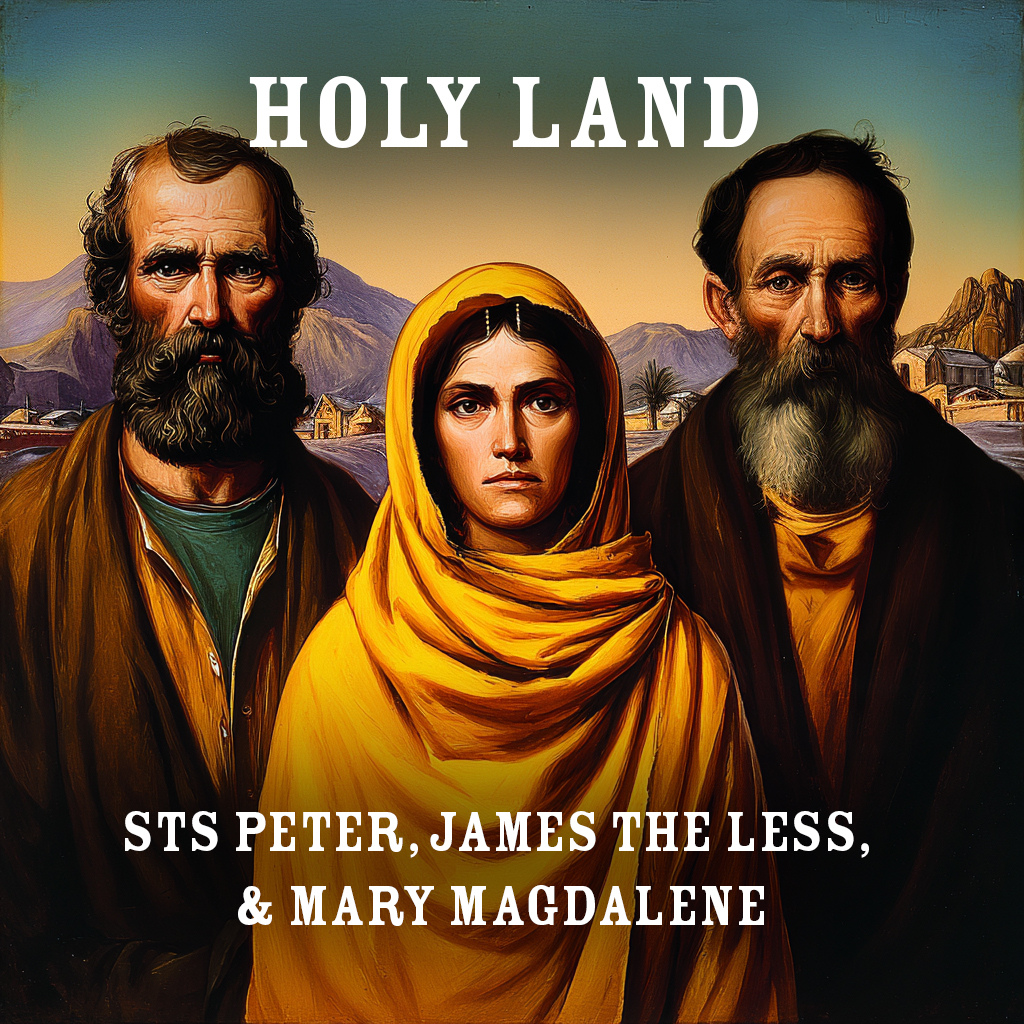
Captain: St. Peter (born in Bethsaida, Galilee, ~1 BC): First pope, foundational to Christianity, established the Church in Rome. “We must obey God rather than men.” https://libertaspress.org/product/st-peter-we-must-obey-god-rather-than-men-t-shirt/
St. James the Less: Cousin of Jesus, Bishop of Jerusalem, author of the Epistle of James emphasizing faith working through works and care for the poor without state coercion. St. Mary Magdalene: First witness to the Resurrection. Exemplar of personal repentance, freedom from sin, and bold proclamation of truth. St. Stephen: First Christian martyr. Model of non-violent witness against unjust authority. St. John: Apostle and Evangelist. “The truth will set you free.” Emphasized love, light over darkness, and the Word as foundation of ordered liberty.
5. Italy
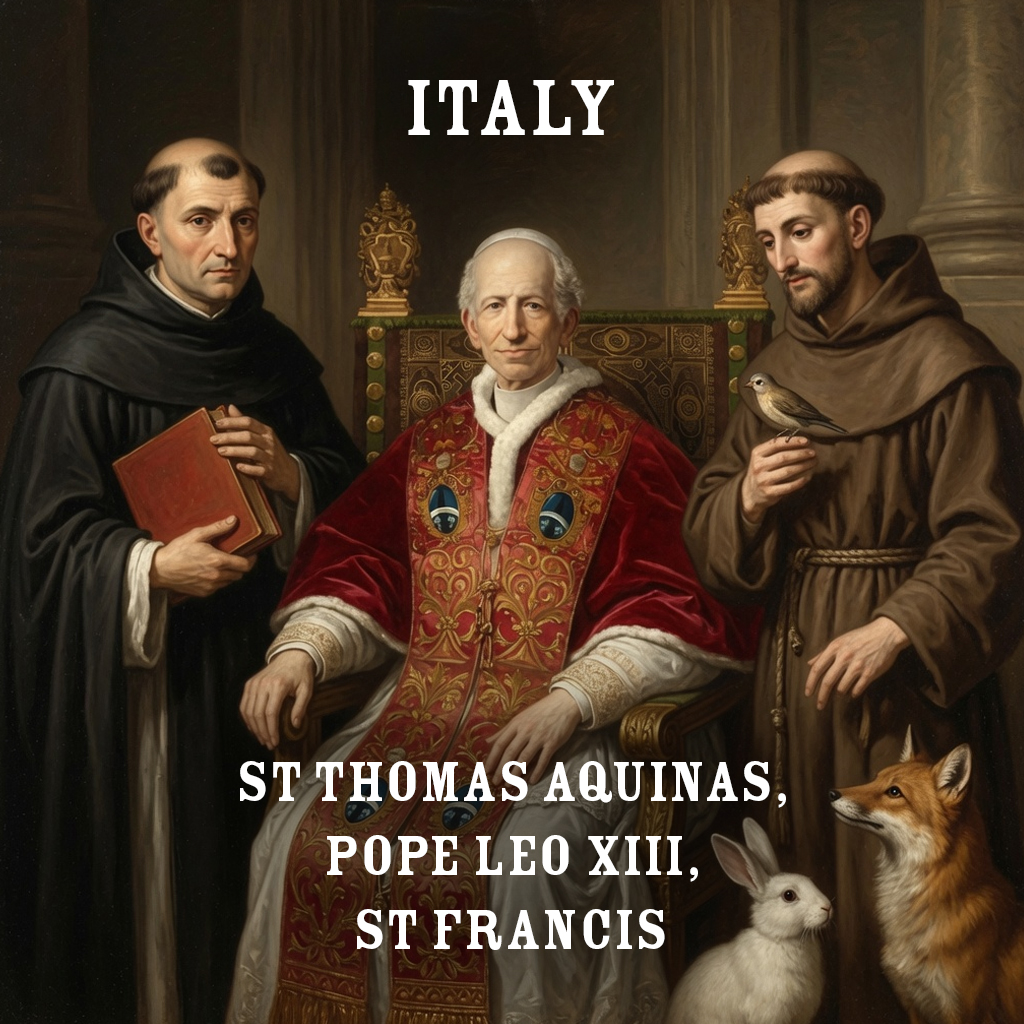
Captain: St. Thomas Aquinas St. Thomas Aquinas (1225–1274): Doctor of the Church, Angelic Doctor. Synthesized faith and reason in Summa Theologica; limited the role of human law to grave vices harming others. “Do no harm.” https://libertaspress.org/product/st-thomas-aquinas-do-no-harm-t-shirt/
Pope Leo XIII: Author of Rerum Novarum and Libertas, defending private property, subsidiarity, and true liberty rooted in natural law. Pope St. John XXIII: Pacem in Terris affirmed human rights and dignity. St. Francis of Assisi: Radical voluntary poverty, care for creation, and peace-making. St. Catherine of Siena: Doctor of the Church. Bold advisor to popes, champion of reform. Dante Alighieri: Poet of Divine Comedy. Critic of political overreach and Church-state entanglement. Luigi Sturzo: Priest, anti-fascist. Advocated subsidiarity, decentralization, and economic liberty.
6. North Africa
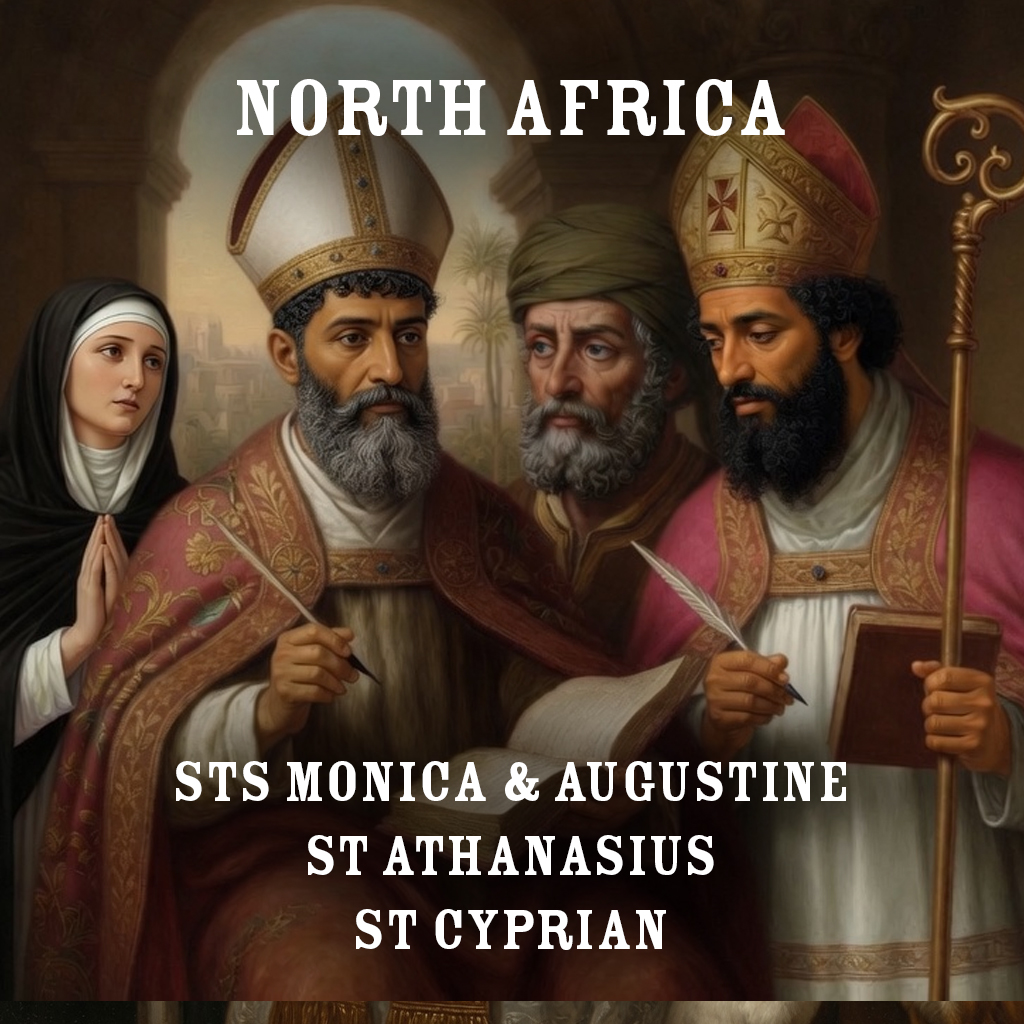
Captain: St. Augustine St. Augustine (354–430): Bishop of Hippo, Doctor of the Church. City of God distinguishes heavenly and earthly realms. “An unjust law is no law at all.”
St. Athanasius: Defender of orthodoxy against imperial pressure. “If the world is against the truth, then I am against the world.” St. Josephine Bakhita: Former slave turned nun. Embodied forgiveness and liberation through Christ. St. Cyprian: Bishop and martyr. Champion of Church unity and charity. Tertullian: Early apologist for religious liberty: “It is a fundamental human right… that every man should worship according to his own convictions.” St. Monica: Model of persistent prayer and maternal influence. Perpetua and Felicity: Martyrs who defied Roman demands for pagan sacrifice; witnesses to conscience and courage.
7. Ireland
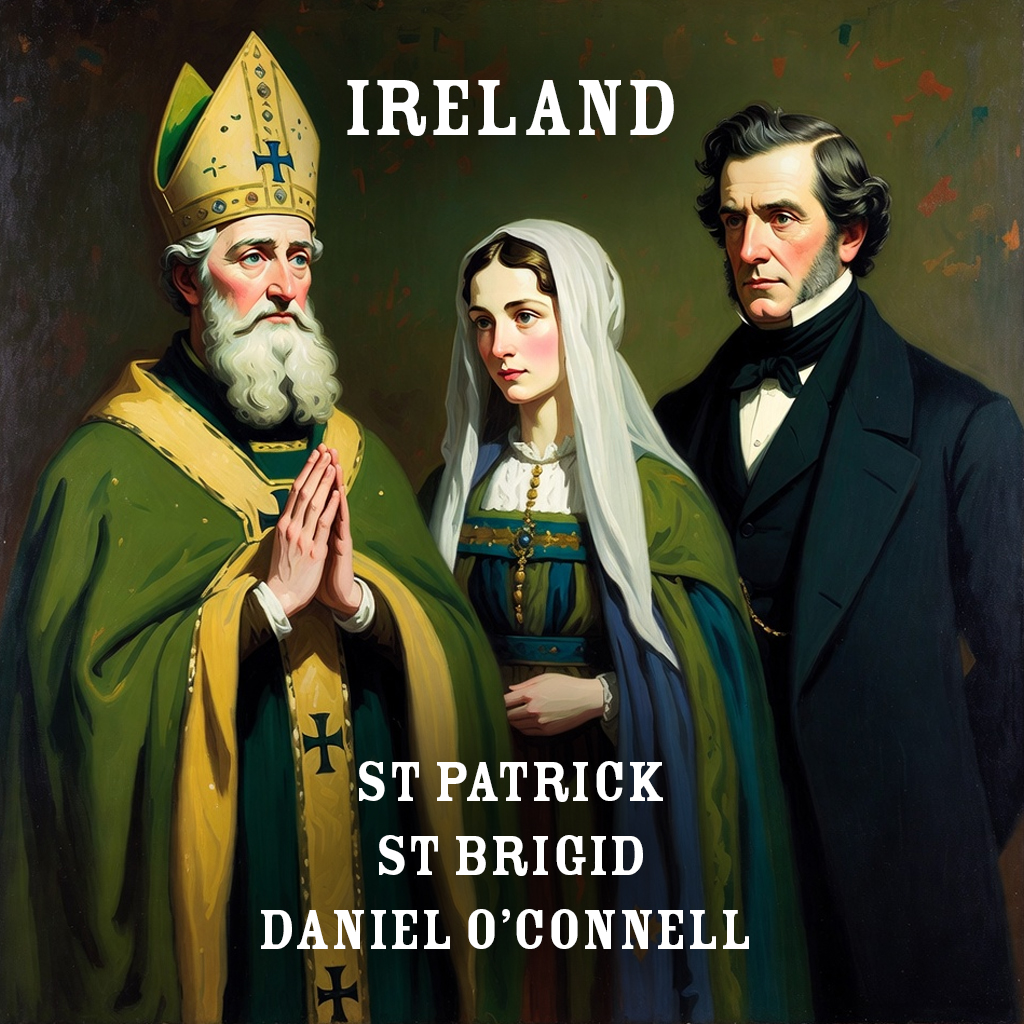
St. Patrick: Apostle of Ireland. Escaped slavery, returned as missionary. Model of personal faith and cultural transformation without coercion. St. Brigid: Abbess. Model of generosity, monasticism, and care for the poor. St. Columba: Missionary monk. Founded Iona; spread faith and learning. Daniel O’Connell: Liberator. Led Catholic emancipation through non-violent constitutional means. Frank Duff: Founder of Legion of Mary. Lay apostolate emphasizing personal holiness and voluntary service. Venerable Matt Talbot: Worker ascetic. Model of temperance, labor dignity, and personal conversion.
8. Spain
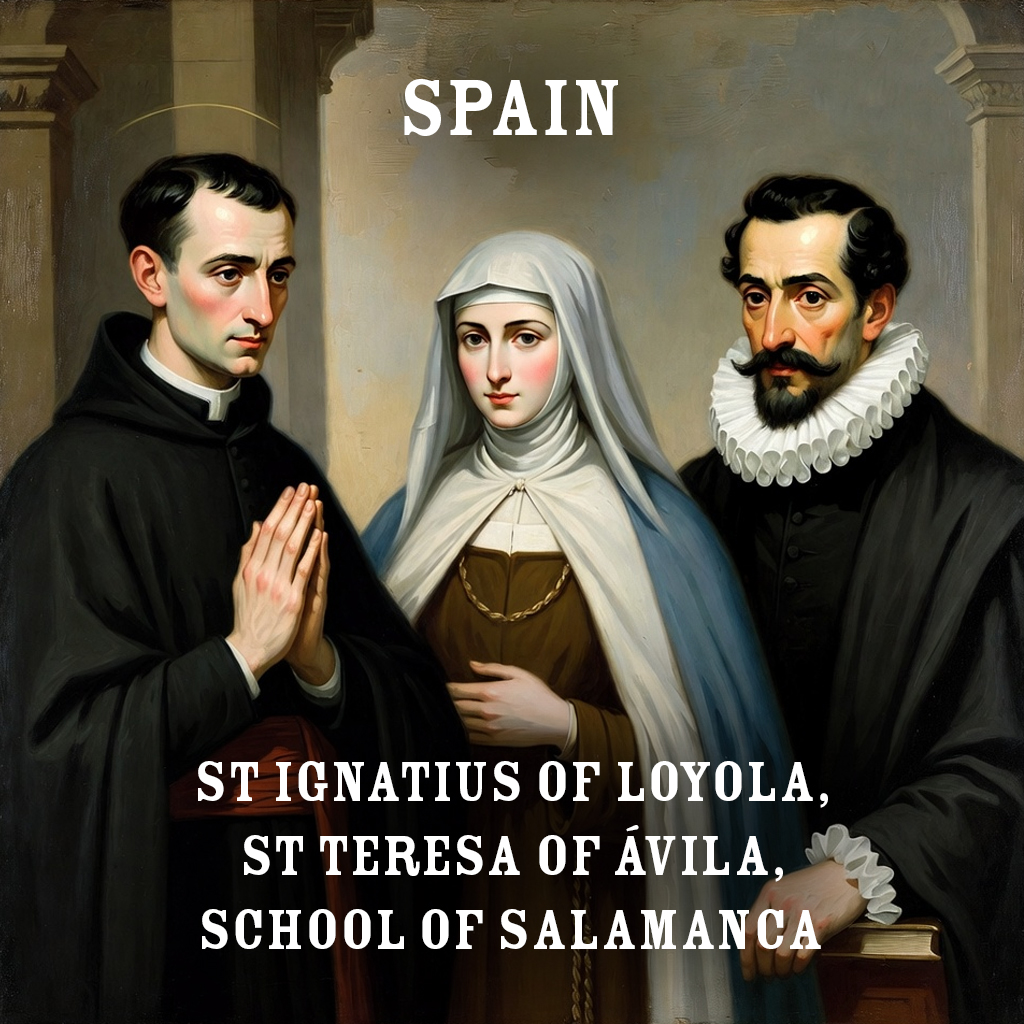
Captain: Francisco de Vitoria Francisco de Vitoria (c. 1483–1546): Founder of the School of Salamanca. Father of international law; defended natural rights of indigenous peoples, free trade, and limits on conquest.
Francisco Suárez: Developed natural law, consent of the governed, and limits on royal power. Bartolomé de las Casas: Tireless advocate for indigenous rights against exploitation. Domingo de Soto: Contributed to property rights and economic justice. Martín de Azpilcueta: Early theorist on money, interest, and just prices. Juan de Mariana: Defended limits on government power. St. Teresa of Ávila: Doctor of the Church. Mystic reformer emphasizing interior freedom. St. John of the Cross, St Ignatius of Loyola, King Phillip II helped defend Christendom
9. United States
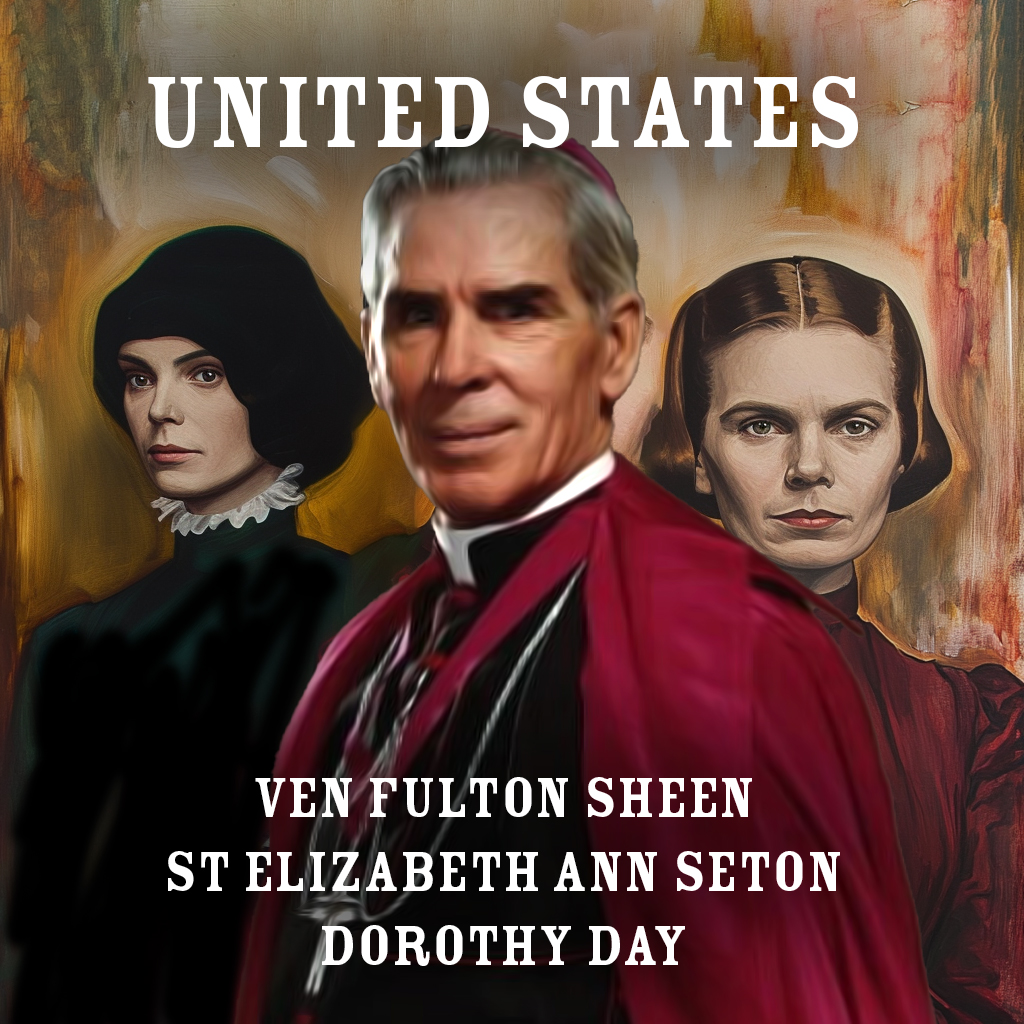
Captain: Fulton Sheen Fulton Sheen (1895–1979): Bishop and evangelist. Critiqued communism; promoted natural law and personal conversion.
Dorothy Day: Co-founder of Catholic Worker. Voluntary poverty, pacifism, and direct aid. St. Elizabeth Ann Seton: Founded Catholic schools; emphasized family and faith. John Carroll: First U.S. bishop. Advocate for religious liberty. Orestes Brownson: Defended constitutional republic and critiqued socialism. Fr. John Courtney Murray: Key influence on religious liberty. Russell Kirk: Emphasized moral order, tradition, and limits on power. Mother Angelica founded EWTN. Blessed Michael Mcgivney founded mutual aid order Knights of Columbus.
10. Germany
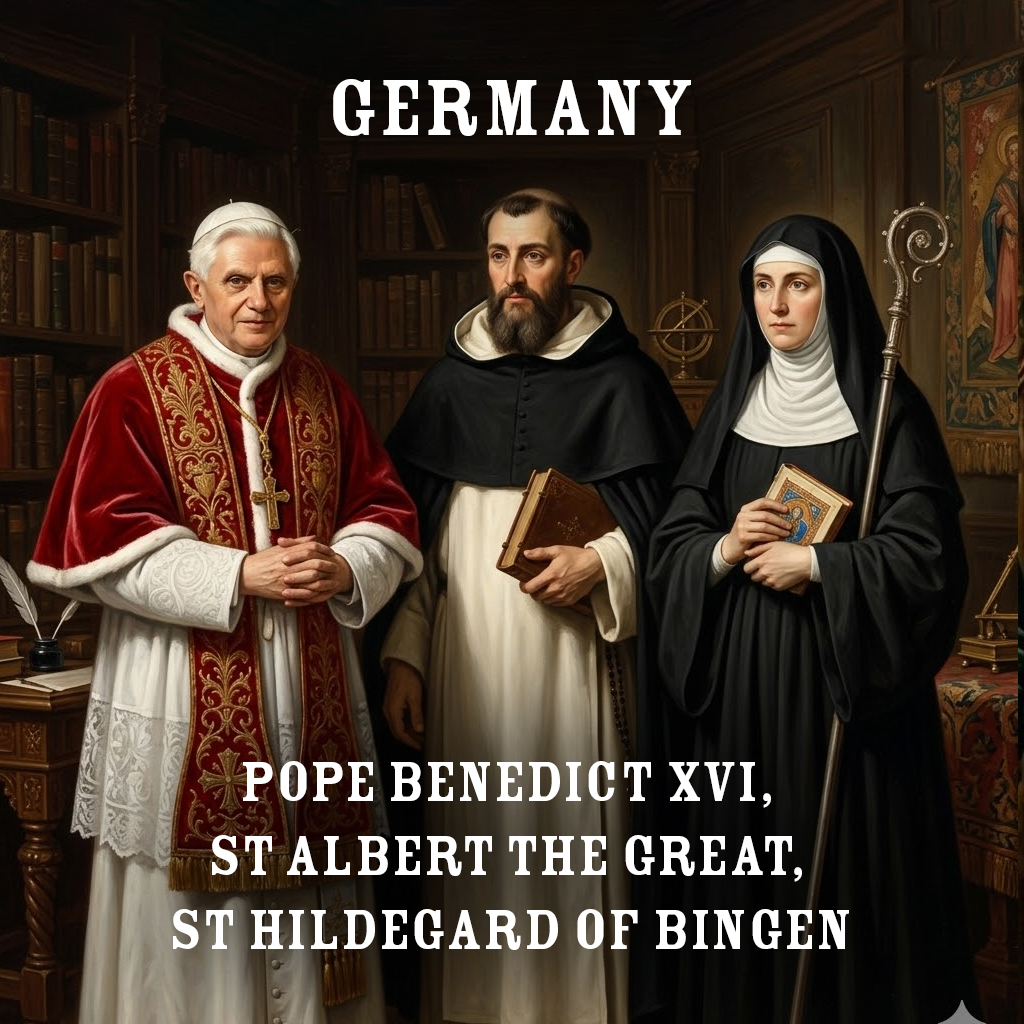
Captain: Pope Benedict XVI Pope Benedict XVI (1927–2022): Theologian pope. Deus Caritas Est; critiqued relativism, defended reason, truth, and subsidiarity against modern ideologies.
St. Albert the Great: Doctor of the Church. Scientist, philosopher, teacher of Aquinas; integrated faith and empirical knowledge. Romano Guardini: Philosopher. Explored personhood, technology, and liturgy against mass society. Wilhelm Röpke: Economist. Ordoliberal; helped shape post-WWII social market economy with moral foundations. St. Hildegard of Bingen: Doctor of the Church. Mystic, composer, healer; visionary voice against corruption. Blessed Franz Jägerstätter: Martyr. Conscientious objector to Nazis; chose faith over state. Adolph Kolping: Priest. Founded Kolpingwerk for worker formation, education, and mutual aid.
11. Austria
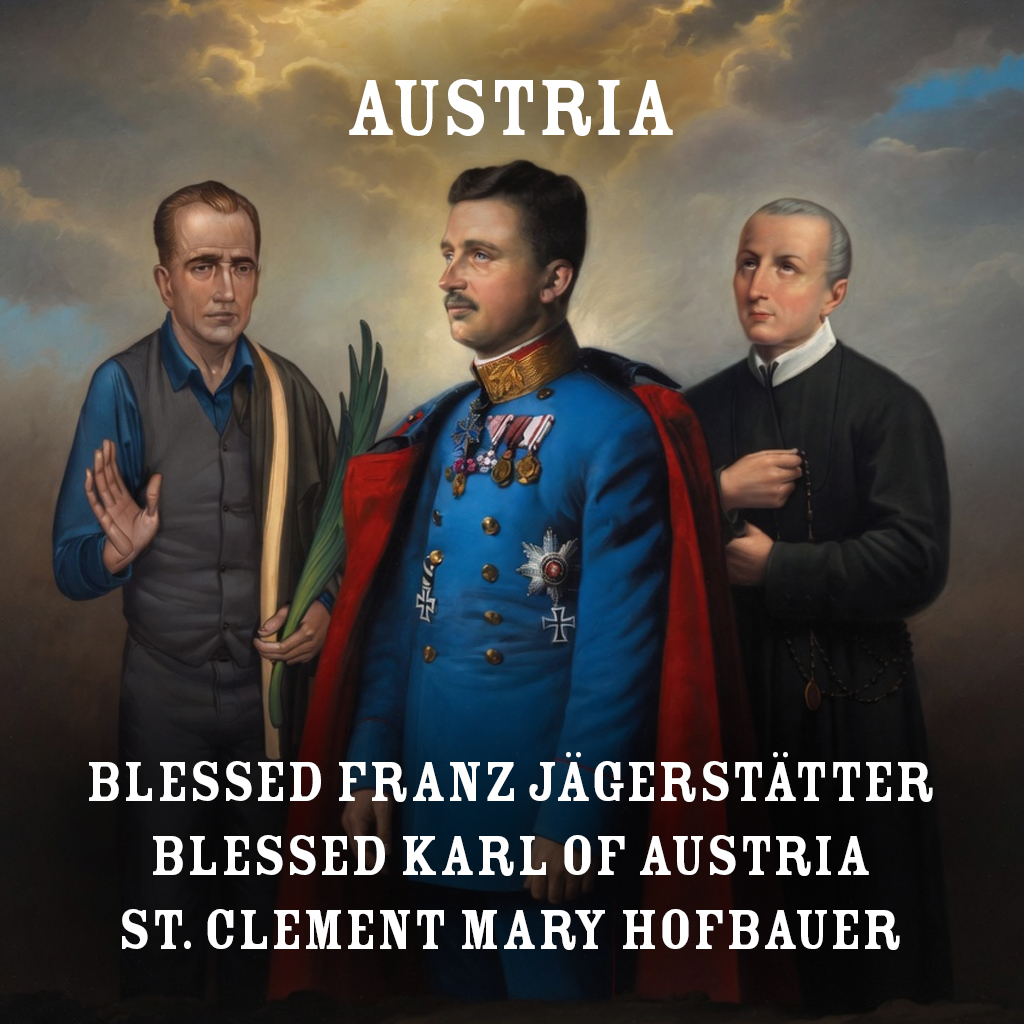
Captain: Blessed Karl of Austria: Last emperor. Peace efforts in WWI; model of Catholic social kingship.
Otto von Habsburg: Advocate for European unity based on subsidiarity and against totalitarianism. Leopold Kohr: Economist. “Small is beautiful”; advocated decentralization and appropriate scale. St. Clement Mary Hofbauer: Redemptorist. “Apostle of Vienna”; promoted education and reform. Franz Schubert: Composer. Lieder and sacred music reflecting Catholic depth and human emotion. Friedrich Hayek Friedrich Hayek (1899–1992): Nobel economist. The Road to Serfdom; spontaneous order, knowledge problem, and limits of central planning.
12. France
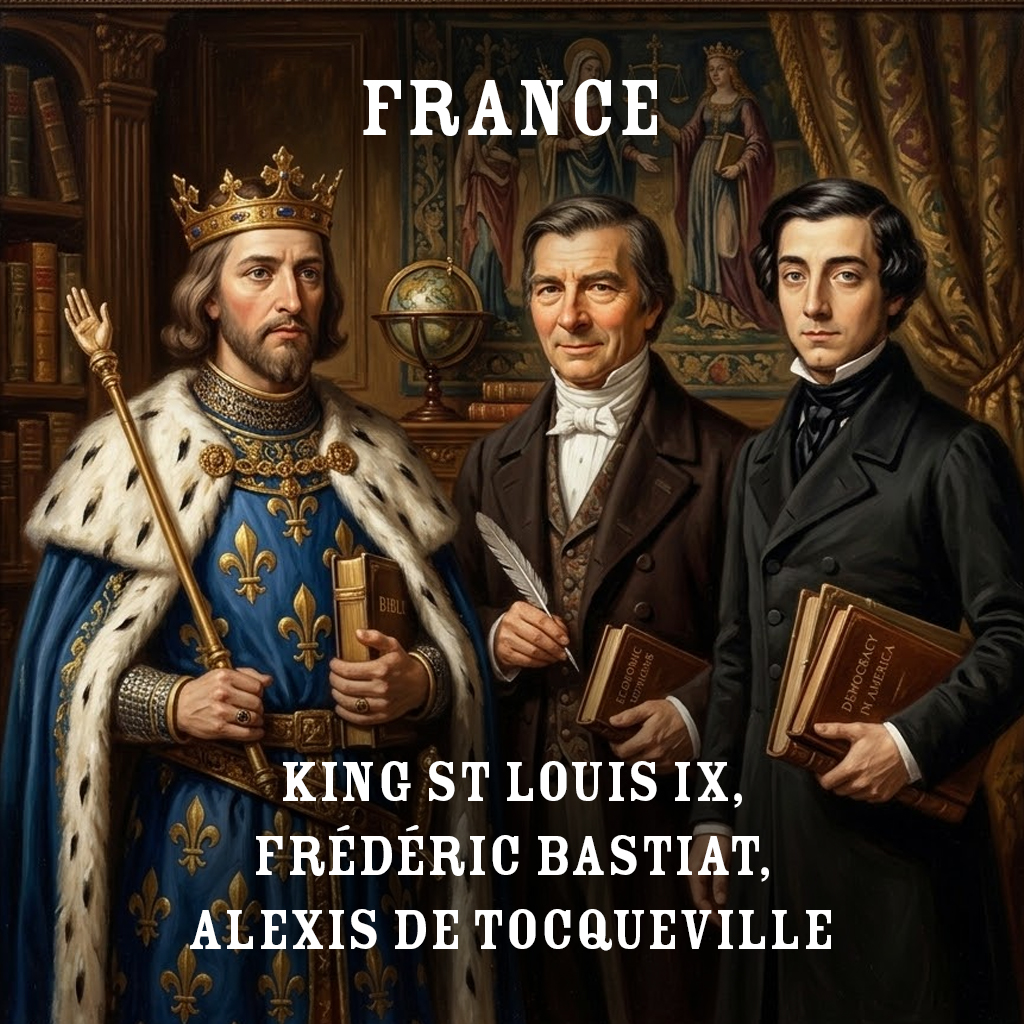
Captain: Alexis de Tocqueville Alexis de Tocqueville (1805–1859): Author of Democracy in America. Warned of soft despotism; praised religion, voluntary associations, and local liberty.
Frédéric Bastiat: Economist. “The law is the organization of the natural right of lawful defense.” Master of economic sophisms. René Girard: Anthropologist. Mimetic theory exposing scapegoating; converted Catholic. Martyrs of the Vendée: Catholic peasants resisting revolutionary anti-Christian terror. St. Louis IX: Model of just Christian kingship and charity. St. Joan of Arc: Followed divine conscience against occupation and corrupt authorities.
13. Vietnam
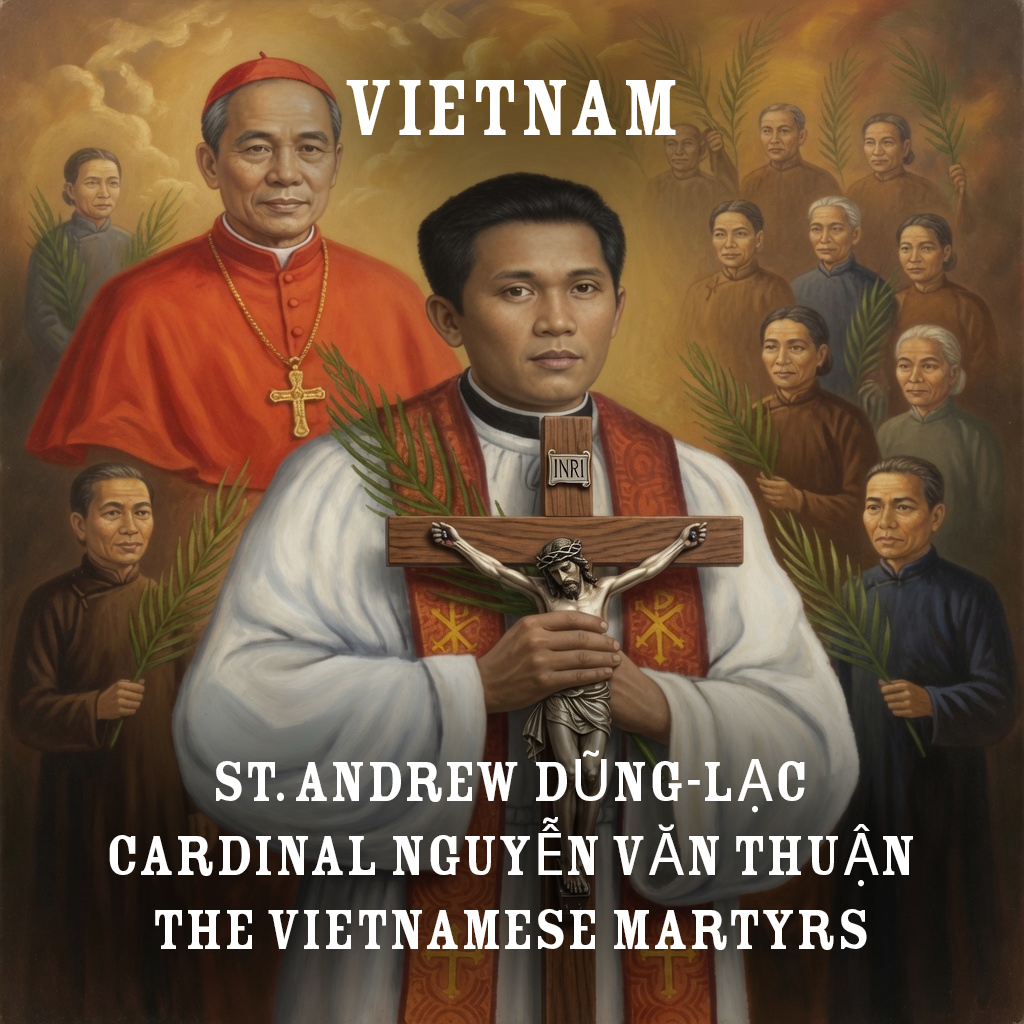
St. Andrew Dũng-Lạc: Priest martyr during persecutions. Cardinal Nguyễn Văn Thuận: Imprisoned bishop. Five Loaves and Two Fish; model of hope in suffering. The Vietnamese Martyrs: Collective witness of faith under persecution. Ngô Đình Diệm: President. Anti-communist Catholic leader. Archbishop Ngô Đình Thục: Brother of Diệm; promoted faith amid challenges. Lê Bảo Tịnh: Martyr associated with Vietnamese Church. Pierre André Retord: Bishop martyr.
14. Portugal
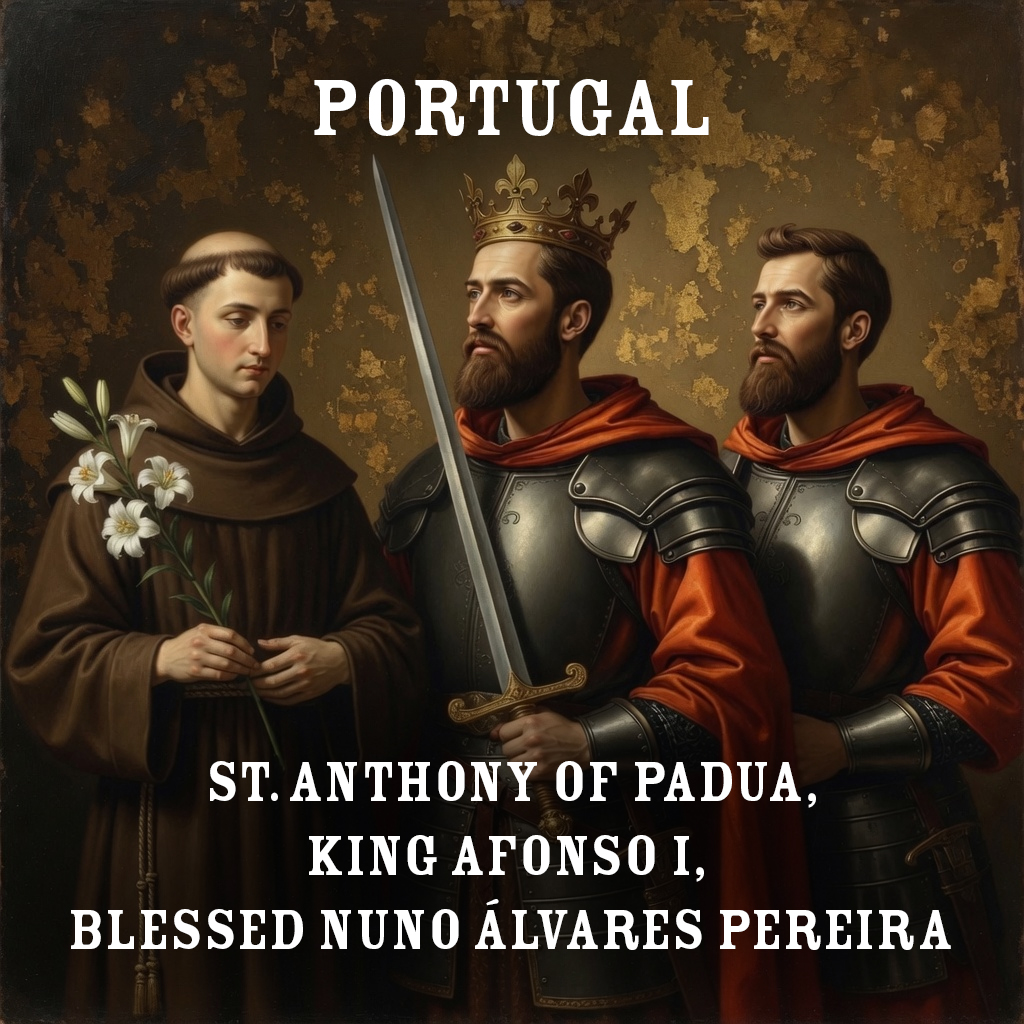
St. Anthony of Padua: Doctor of the Church. Preacher, miracle-worker; patron of the poor and lost items. Blessed Nuno Álvares Pereira: Military leader and Carmelite. Defender of Portuguese independence. Prince Henry the Navigator: Promoter of exploration; advanced science, trade, and evangelization. King Afonso I: First king of Portugal. Consolidated Christian kingdom. Lucia dos Santos: Fatima visionary. Witness to Marian apparitions calling for prayer and conversion. St. John de Brito: Jesuit martyr. Missionary to India. João II: King. Consolidated power and supported exploration.
15. Philippines
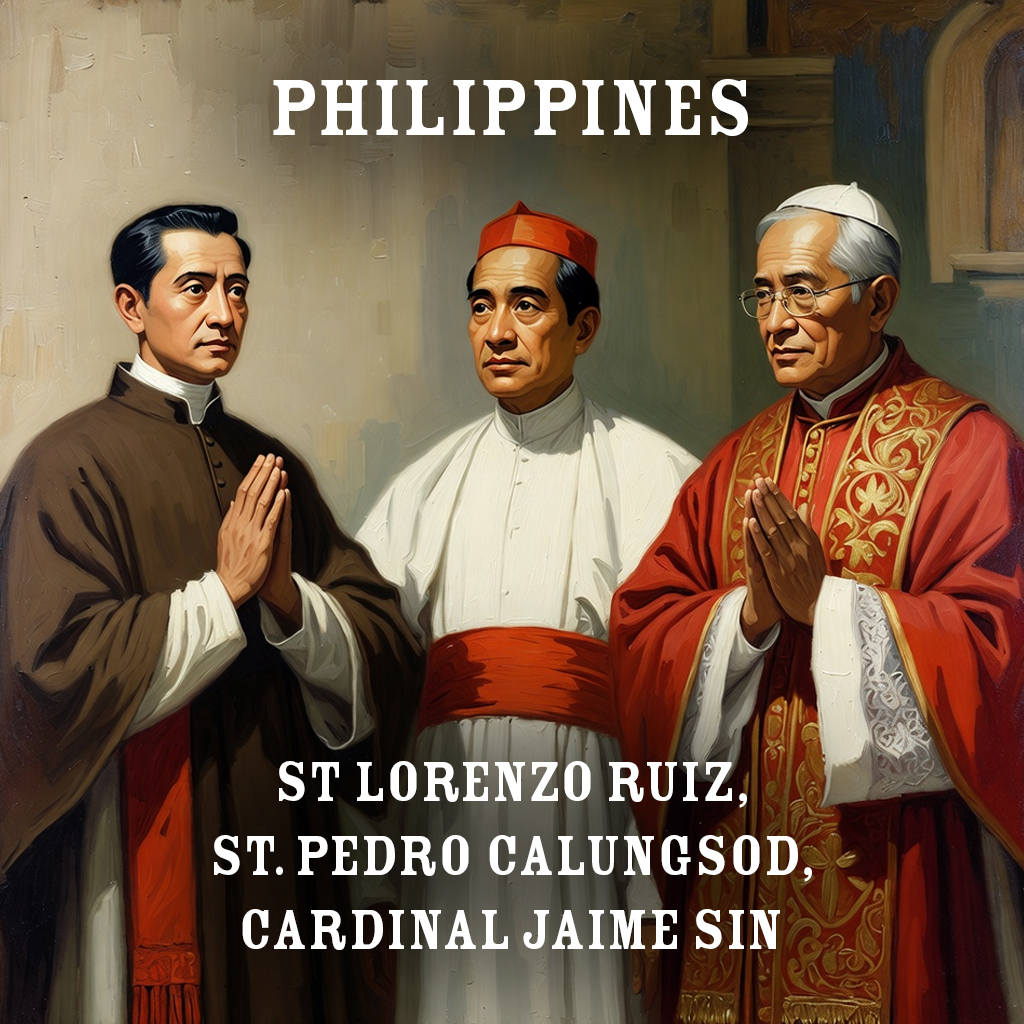
St. Lorenzo Ruiz: First Filipino saint and martyr. Lay catechist executed in Japan. St. Pedro Calungsod: Young martyr. Catechist in Marianas. Cardinal Jaime Sin: Archbishop. Key role in People Power Revolution ousting dictator Marcos non-violently. Ninoy Aquino: Opposition leader. Assassinated; symbol of resistance to martial law. Corazon Aquino: President. Led democratic restoration after People Power. José Rizal: National hero. Writer, reformer; critiqued colonial abuses while promoting education and rights. Cardinal Luis Antonio Tagle: Contemporary voice on mercy, the poor, and Church in Asia.
16. Lebanon
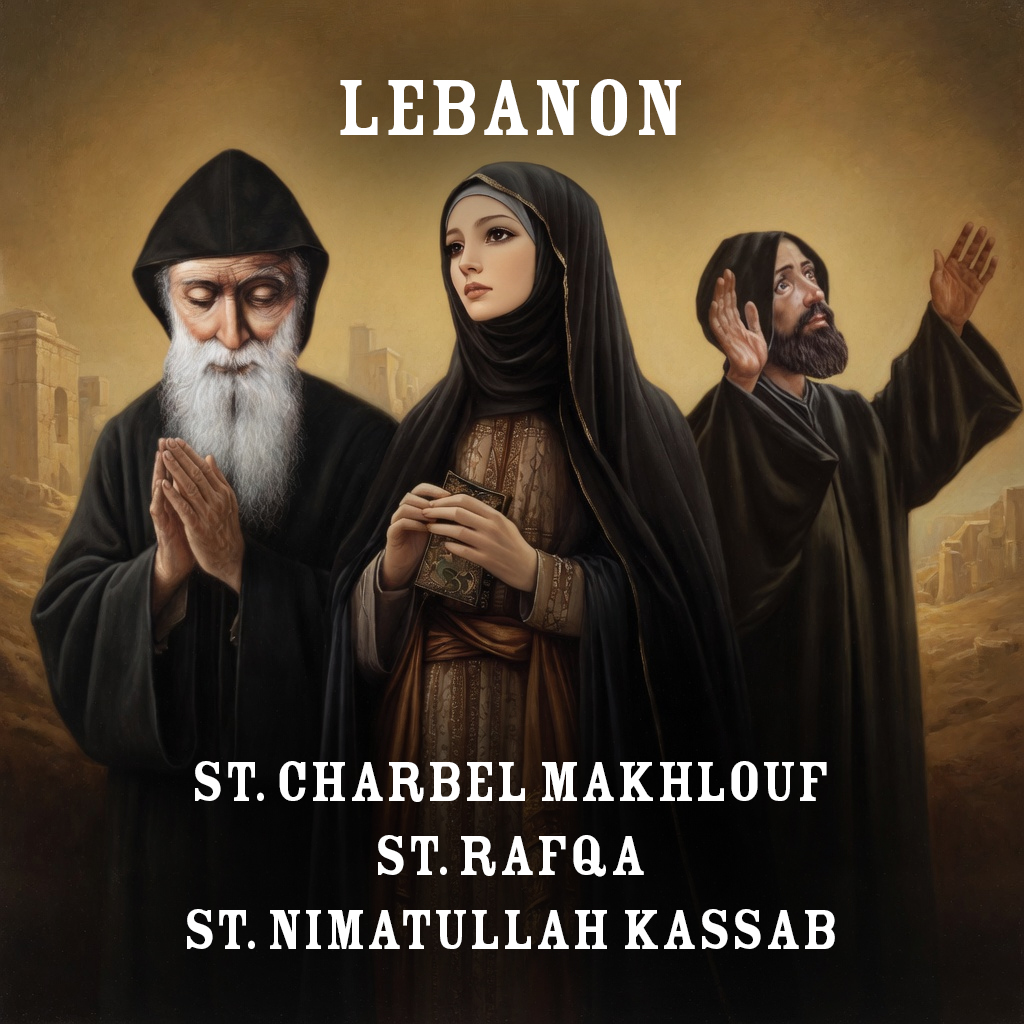
St. Charbel Makhlouf: Maronite hermit. Model of ascetic prayer and miracles. St. Rafqa: Lebanese Maronite nun. Patient sufferer offering pain for others. St. Nimatullah Kassab: Maronite monk and martyr. Patriarch Elias Hoyek: Leader during turbulent times; defended Lebanese autonomy. Charles Malik: Philosopher, diplomat. Key drafter of Universal Declaration of Human Rights; emphasized dignity. Khalil Gibran: Poet and writer. The Prophet; themes of freedom, spirituality, and individualism. Patriarch Bechara al-Rahi: Current Maronite leader navigating faith, politics, and liberty in the Middle East.