 The Libertarian Catholic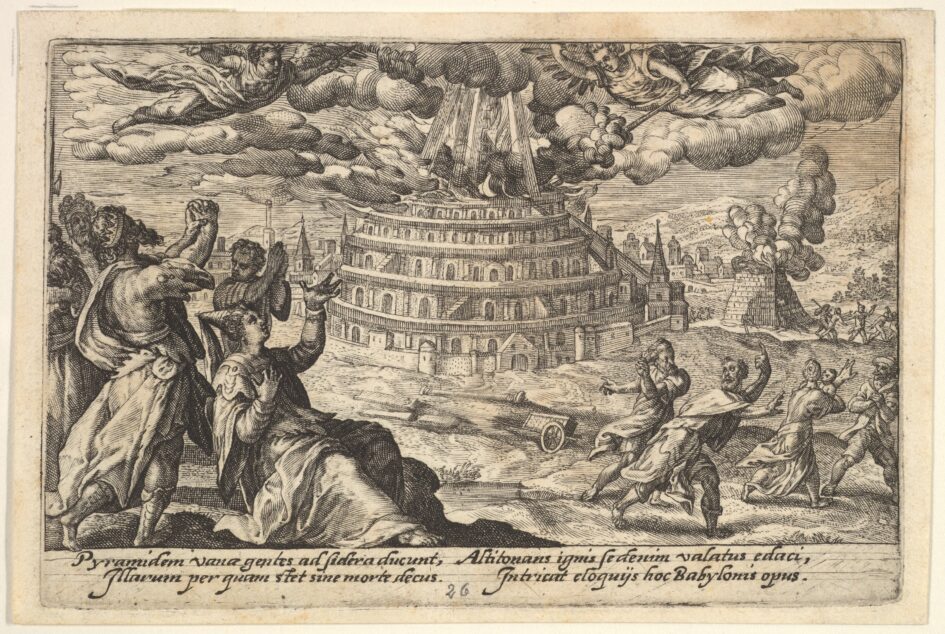
Pope Leo XIV’s encyclical on artificial intelligence and human dignity contains some of the most powerful affirmations of individual personhood in modern Social Doctrine — and some of its most troubling concessions to statist collectivism. We read it whole.
OUR INTERPRETIVE FRAMEWORK
Imago Dei (Individualism): Each person is uniquely and irreducibly created in the image of God — not as a member of a collective, but as a singular, unrepeatable soul. This is the theological root of genuine individualism.
Capax Dei (Reason): The human capacity to know God also means the capacity to know truth through reason. Enlightenment rationality, rightly ordered, is not antagonistic to faith — it is its intellectual corollary.
Natural Law (Negative Rights): The divine order inscribed in creation grounds inalienable rights to Life, Liberty, and Property. These are negative rights — freedoms from coercion — not positive entitlements that require others to provide them.
Pope Leo XIV has given us something genuinely significant — not merely another entry in the long catalog of modern Social Doctrine, but a document that dares to plant the Church’s ancient anthropology squarely in the middle of the most consequential technological moment in human history. Magnifica Humanitas (“The Grandeur of Humanity”), published on May 25, 2026, arrives precisely 135 years after Leo XIII’s Rerum Novarum, and the parallelism is deliberate and instructive. Where Leo XIII faced the emergence of industrial capitalism, Leo XIV faces the emergence of artificial intelligence. Where Leo XIII articulated the dignity of the laborer against the encroachments of Capital and State alike, Leo XIV articulates the dignity of the person against the encroachments of algorithmic power and the technocratic imagination.
For libertarian Catholics — those who understand Free Market Liberalism not as a concession to secularism but as a positive outgrowth of the Church’s own deepest commitments to the individual person — this encyclical is a complex and often thrilling text. Its foundational anthropology is, in crucial respects, our anthropology. Its diagnosis of concentrated power resonates strongly with our own concerns about monopoly, coercion, and the displacement of voluntary civil society. But the document’s prescriptions frequently betray its own principles, reaching reflexively for the instruments of state regulation and international governance precisely when the logic of subsidiarity and natural liberty would demand something more radical: the protection of the human person through the dispersal of power rather than its consolidation at higher levels.
We read this encyclical, as we read all magisterial texts, with the reverence owed to the Holy Father’s teaching office and the critical intelligence owed to the tradition itself.
✦ ✦ ✦
I. Where Leo XIV Gets It Right: The Imago Dei as Radical Individualism
The most important passage in the entire encyclical may be one that passes without fanfare, buried in the second chapter’s treatment of human dignity. The Pope writes:
“The value of persons does not depend on what they achieve or produce. There are rights that apply to everyone simply by virtue of being human, and no human power can legitimately deny or arbitrarily limit them.”
— Magnifica Humanitas, §51
This is an extraordinary statement, and libertarian Catholics should recognize it as their own. The claim that human worth is intrinsic — not contingent on productivity, social contribution, economic output, or even moral merit — is precisely the theological ground on which the entire edifice of natural rights theory is constructed. John Locke’s “life, liberty, and estate” was not a departure from the Christian tradition; it was, in its deepest structure, a translation of the doctrine of Imago Dei into the language of political philosophy.
The Pope’s insistence that “no human power can legitimately deny or arbitrarily limit” inherent rights is not a soft aspiration — it is a hard theological claim. It is the language of the natural law tradition that grounds negative rights.
The encyclical grounds this in Genesis 1:26-27 with admirable clarity: “Created for relationship, every human person is planned and willed by God to enter into communion with him, with others and with creation. Human dignity does not depend on a person’s abilities, wealth or position in life, nor on the right or wrong choices made; instead, it is a gift that precedes and transcends each person, endowed by God as an expression of his unfailing love.” (§50)
This is not collectivism. This is not the hive. This is an irreducible account of the individual soul as the locus of divine investment — what we mean when we say Imago Dei is the theological root of Individualism. Each person is not a node in a network; each person is an end, not a means. The Pope explicitly rejects the utilitarian inversion: “persons end up being reduced to a means of achieving results, a resource to be used and exploited, and are no longer recognized as a proper end in themselves.” (§51)
Kant’s formula (“never merely as a means, but always at the same time as an end”) was often cited as the high-water mark of secular ethics. Leo XIV reminds us it was baptized long before Kant was born.
On Capax Dei: Reason as Theology’s Ally
The encyclical’s treatment of the relationship between faith and reason is notably hospitable to the Enlightenment inheritance — more so than many recent documents. The Pope notes approvingly that the Second Vatican Council recognized “a growing recognition of the sublime dignity of all persons, their superiority over material things and their universal and inviolable rights and duties” as one of the positive achievements of modernity (§51, citing John Paul II). This is Capax Dei in action: the human capacity to reason toward moral truth, even without explicit revelation, discoverable through the natural law written on the heart.
“When reason seriously examines human nature, it is capable of discovering values that apply to everyone, since they derive from human nature.”
— Magnifica Humanitas, §56
This passage is crucial and underappreciated. It is the Pope’s assertion that the moral order is not arbitrary — not decreed by ecclesiastical fiat, not the product of social consensus — but discovered by reason exercised upon the nature of things. This is the classical natural law epistemology that runs from Aquinas through Suárez through Grotius and into the liberal tradition. It is precisely why the Church can speak to all people of goodwill, and why the libertarian tradition, at its best, is not alien to Christianity but consonant with it.
✦ ✦ ✦
II. The Subsidiarity Passages: The Encyclical’s Most Libertarian Moments
If any section of Magnifica Humanitas reads as though it were drafted with libertarian sympathies, it is the extended treatment of subsidiarity in Chapter Two. The Pope writes:
“The role of individuals, families, local communities and intermediary organizations should not be supplanted by higher-level authorities. Moreover, higher-level institutions must recognize, protect and promote the freedom and creativity of lower-level entities, coordinating their contributions so that they can cooperate effectively for the common good.”
— Magnifica Humanitas, §68
And more pointedly: “Starting with Leo XIII and the beginnings of modern social teaching, the Church has insisted that neither the individual nor the family should be subsumed by the State, but should be allowed to act freely, as far as possible, without harming the common good.” (§69)
This is the bedrock of what we have always argued: that Catholic Social Teaching, properly understood, is profoundly anti-statist in its structural logic. Subsidiarity is not a footnote to the tradition — it is one of its load-bearing pillars. The encyclical even explicitly warns against “any form of paternalistic or welfare-based management of societal life” (§70), preferring instead “a culture of shared responsibility in a State that values citizens’ initiative.”
The application of subsidiarity to Big Tech is one of the encyclical’s most interesting and genuinely novel contributions. The Pope recognizes that the threat to subsidiarity in our era comes not primarily from the State but from private corporate power:
“The highest level is not the State, but rather major economic and technological actors that exercise de facto power over the conditions of everyday life. This level, which monopolizes expertise, data and decision-making authority, involves companies and platforms that define conditions for access, rules of visibility, forms of interaction, and even economic opportunities.”
— Magnifica Humanitas, §71
This is a sophisticated and largely correct observation. When a handful of digital platforms controls the informational environment, sets the terms of economic participation, and shapes the social imagination of billions of people, the abstract freedom of a legal marketplace means very little to the actual person navigating it. Here the Pope’s concern rhymes authentically with the libertarian critique of monopoly power — not capitalism as such, but the corruption of markets through concentration, regulatory capture, and the alliance of government and corporate interests that libertarians call “crony capitalism.”
Where we would gently diverge is on the remedy. The encyclical instinctively turns toward more governance — “States and transnational institutions are called to ensure fair rules and effective safeguards” (§72) — when the better anti-monopoly medicine is competitive market structure, permissionless entry, open-source alternatives, and strong property rights in personal data. More state power applied to concentrated private power does not reduce concentrated power; it typically transfers it, or entrenches a two-headed dragon in its place.
✦ ✦ ✦
III. The Diagnosis of AI Power: Correct; The Prescription: Contested
The encyclical’s diagnosis of the “technocratic paradigm” — borrowed directly from Francis’s Laudato Si’ — is philosophically serious and largely accurate. The Pope warns that technology, when it becomes the standard by which all things are measured, reduces the human person to a datum, an output, a unit of measurable performance:
“The danger of humanity becoming a victim of its own achievements was already clearly recognized by Saint Paul VI, who warned that ‘the most extraordinary scientific progress, the most astounding technical feats and the most amazing economic growth, unless accompanied by authentic moral and social progress, will in the long run go against man.'”
— Magnifica Humanitas, §94
The invocation of Romano Guardini’s warning — “Contemporary man has not been trained to use power well” — is apt and humbling. The problem with AI is not the technology itself; it is the human soul that wields it. This is exactly the right level of analysis. No regulatory framework can substitute for the formation of conscience; no international governance body can replace the cultivation of virtue. In this encyclical, Pope Leo XIV understands this at its best.
Where it becomes vulnerable to libertarian critique is when it shifts from moral formation to institutional regulation. The natural law tradition, from which the Church’s social teaching flows, distinguishes between the moral law (which governs what we ought to do) and the civil law (which governs only what may be coercively imposed). Not every moral failure calls for legal prohibition. The encyclical at times blurs this distinction, treating the full panoply of social ills — inequality, digital exclusion, algorithmic bias, the erosion of attention — as problems to be governed from above rather than addressed through voluntary associations, competitive markets, and the formation of free persons.
✦ ✦ ✦
IV. Where We Must Respectfully Dissent: Property, Regulation, and the Uses of Solidarity
The Property Question
The encyclical’s treatment of private property is where libertarian Catholics will find the sharpest tension. The Pope reiterates the traditional Social Doctrine position that the right to private property, while real, is always “subordinate to the universal destination of goods” (§66), citing John Paul II’s characterization of this subordination as the “first principle of the whole ethical and social order.”
We do not dispute that property carries social obligations, or that the goods of creation are ultimately given for the benefit of all. But there is a crucial distinction between a moral obligation (which is fulfilled through voluntary charity, exchange, and stewardship) and a legal subordination (which implies the legitimacy of forced redistribution). The encyclical’s language — including the striking claim that solidarity means “to restore to the poor what belongs to them” (§66, citing Francis) — slides between these two registers in ways that have historically licensed serious overreach by civil authorities.
The natural law tradition grounds property rights not as social conveniences but as expressions of the person’s inherent dignity — the extension of self into the world through labor and stewardship.
John Locke — who was, it should be remembered, a deeply religious thinker — grounded property rights in exactly the same place the Church grounds human dignity: in the fact that persons are created by God with a nature, a body, and a vocation. To labor is to extend the self into creation; to own the fruit of that labor is to protect the integrity of the person. The natural law tradition does not invent property rights as a social convenience; it discovers them in the structure of rational, embodied, free human nature. When the encyclical treats property as merely instrumental — always subordinate to collective determination of the “universal destination” — it risks dissolving the very protections that keep the person from becoming a resource for others’ purposes.
The extension of “universal destination” to algorithms, platforms, data, and intellectual property (§67) is particularly striking. The encyclical seems to suggest that because knowledge-based goods can be shared at near-zero marginal cost, they ought to be governed as a commons. But this reasoning, if applied consistently, eliminates the incentive structures that produce innovation in the first place. The free market — properly understood — is not the enemy of broad access to goods; it is its most historically powerful generator. The encyclical would benefit from a more nuanced engagement with the economics of intellectual property rather than a straightforward extension of the medieval common-stock analogy.
The Regulatory Instinct
Throughout Chapter Four, the encyclical calls for regulatory interventions in communication, labor markets, and digital platforms. While the specific concerns motivating these calls are legitimate — the weaponization of social media against truth, the displacement of workers by automation, the algorithmic manipulation of behavior — the proposed remedies consistently point toward expanded state authority.
The libertarian Catholic alternative is not indifference to these harms. It is a recognition that:
First, the same concentrated power that produces these harms typically also captures the regulatory process meant to check it. Platform monopolies did not emerge despite regulation; they emerged, in significant part, because of regulatory environments that favored incumbents and raised entry barriers for competitors. Adding more regulation to fix the problems of regulation follows a well-worn path to corporatism, not justice.
Second, the principle of subsidiarity — which the encyclical itself celebrates — demands that we ask whether these problems can be addressed at a lower level before escalating to state or international governance. Voluntary certification bodies, competitive open-source alternatives, consumer cooperatives, professional associations with enforceable ethical codes, and robust civil society institutions can address many of the harms the Pope identifies without concentrating additional coercive power at the top.
On Solidarity: A Beautiful Virtue, A Dangerous Principle
The encyclical’s treatment of solidarity is theologically rich and, in its description of the virtue, quite beautiful. Solidarity as the recognition that “the future of each individual is connected to the future of all” (§73) is a genuine expression of the Christian social vision. As a virtue — a cultivated disposition of care, generosity, and attention to the common welfare — solidarity is one of the great achievements of the Christian moral tradition.
But the encyclical also treats solidarity as a structural principle that should govern institutional arrangements. Here the concern arises: solidarity as a personal virtue is lived out in free voluntary action — in charity, in association, in mutual aid, in the whole rich ecosystem of civil society that Tocqueville recognized as the genius of a free people. Solidarity as a structural mandate can all too easily become the theological warrant for compulsory redistribution, managed by administrators who claim to act on behalf of the universal brotherhood while progressively eroding the freedom and initiative that makes genuine solidarity possible in the first place.
The encyclical does partly recognize this when it notes that “when solidarity is not supported by subsidiarity, it degenerates into a form of welfare that does not foster responsibility” (§73). This is exactly right, and we wish the author had pressed this insight further into its policy prescriptions.
✦ ✦ ✦
V. The Babel Metaphor: A Libertarian Reading
The encyclical’s governing image — the contrast between the Tower of Babel and the rebuilding of Jerusalem under Nehemiah — is theologically and sociologically richer than it may first appear. The Pope reads Babel as the failure of a project built on pride, uniformity, and the elimination of diversity in favor of centralized efficiency: “a single language, a single technology, a single direction” that collapses because it is grounded in self-assertion rather than communion (§7).
For a libertarian Catholic, there is an irony here worth noting. The Tower of Babel — imposed uniformity, top-down coordination, the suppression of plurality in the name of efficiency — describes not the free market but its opposite: the centrally planned economy, the regulatory monoculture, the administrative state that insists on a single approved answer to every social question. The free market, by contrast, is precisely the mechanism Hayek described as a “discovery procedure” — a dispersed, bottom-up, pluralistic process of trial and error through which the genuine diversity of human purposes can find expression without imposing any single vision from above.
“Rebuilding today means recognizing that, precisely from the plurality of voices and visions… a bright possibility emerges. Indeed, this is the possibility of building together, of transforming diversity into a resource.”
— Magnifica Humanitas, §10
We could not agree more. And we note gently that the institutional instrument most consonant with this vision — the voluntary, pluralistic, diversity-respecting, bottom-up mechanism for building together — is the free and competitive market, not the regulatory state or the international governance body.
✦ ✦ ✦
VI. A Doctrinal Balance Sheet
| Doctrine / Theme | Libertarian Catholic Reading | Assessment |
| Imago Dei as individual dignity — each person as irreducible end, not means | Strongly supports natural rights individualism; person precedes collective |  |
| Ontological dignity — inherent, not earned through productivity | Grounds negative rights; refutes utilitarian reduction of persons | |
| Subsidiarity — lower levels before higher; anti-paternalism | Precisely the structural argument against state expansion | |
| Natural law as rational discovery — reason can find moral truth universally | Foundation of Capax Dei; grounds cross-confessional rights discourse | |
| Critique of concentrated power — Big Tech monopoly as threat to persons | Resonates; divergence on remedy (competition vs. regulation) |  |
| Solidarity as virtue vs. structural mandate | Solidarity as personal virtue: yes. As state-enforced redistribution: no |  |
| Common good as regulatory framework | Common good achieved through dispersed voluntary action; not top-down management | |
| Universal destination of goods — property subordinated to collective | Conflates moral obligation with legal coercion; risks dissolving natural property rights |  |
| International governance bodies for AI regulation | Centralizes power at highest possible level; contradicts subsidiarity |  |
| Extension of “universal destination” to algorithms and data | Economically confused; undermines innovation incentives; threatens IP rights | |
✦ ✦ ✦
VII. Against the Posthuman: Chapter Three and the Theology of Limit
Chapter Three contains what is, theologically, the most original and courageous section of the entire encyclical — the extended engagement with transhumanism and posthumanism. Leo XIV confronts directly the Silicon Valley eschatology that has quietly displaced Christian anthropology in the minds of the technologists who are building our future: the promise that the human condition, with its vulnerability, finitude, and mortality, is essentially a bug rather than a feature, and that sufficient engineering can produce an upgrade.
The Pope’s response is not reactionary. He does not romanticize weakness or sentimentalize suffering. But he insists, with theological precision, that accepting the limits and vulnerabilities of human nature is not defeatism — it is the precondition for authentic dignity:
“Building for the common good means accepting the limits and weakness of humanity without considering them an error to be corrected… true fulfilment is not achieved by eliminating weakness but through harmonious growth. It is found where freedom and responsibility are intertwined with mutual care and true solidarity.”
— Magnifica Humanitas, §12
This is, from a libertarian Catholic perspective, a vital insight and one that deserves to be heard across ideological lines. The transhumanist project is, in its deepest structure, a project of radical self-ownership pushed beyond any theological constraint — the human person as raw material for self-reconstruction. It is, paradoxically, both the apotheosis of libertarian individualism and its self-destruction: the “self” that is endlessly upgraded eventually has no stable identity that could be the bearer of rights, the subject of dignity, or the image of God. You cannot have Imago Dei without a recognizable imago.
The transhumanist project is, paradoxically, both the apotheosis of individualism and its self-destruction. A “self” endlessly upgraded has no stable identity to be the bearer of rights or the image of God.
The encyclical’s concept of the “authentic ‘more than human'” is theologically elegant: the true transcendence of the human condition comes not through technological enhancement but through grace — the divinization (theosis) that Christian tradition has always understood as the proper fulfillment of human nature, not its replacement. “The ‘more’ that every human heart desires is already present in Christ,” the document insists, locating the drive toward transcendence within the theological anthropology of Capax Dei. Human beings desire God — that is the ache at the center of every transhumanist fantasy, however secularized. The answer is not a better chip but a deeper prayer.
The critique of the “technocratic paradigm” — the tendency to let efficiency, control, and profit alone shape all decisions, reducing creation to an object of exploitation and human beings to performance metrics — is sharp and accurate. Romano Guardini’s observation that contemporary humanity has not been trained to use power well is one of the most important intellectual inheritances of the twentieth century, and Leo XIV deploys it well.
The Sociology of Disenchantment
There is a deeper sociological current running beneath this chapter that deserves to be named explicitly, even where the encyclical leaves it implicit. Max Weber’s concept of Entzauberung — the “disenchantment of the world” through rationalization and bureaucratization — describes a process in which the rich, qualitative, meaning-saturated world of traditional culture is progressively replaced by a thin, quantitative, procedural world organized around the maximization of measurable outputs. Artificial intelligence, in its current commercial form, is the fullest realization of the Weberian iron cage: a system that reduces all human communication to token prediction, all labor to task completion rates, all attention to engagement metrics.
The Church’s response, at its best, is what Charles Taylor called a “reenchantment” — the recovery of the thick moral and metaphysical framework within which human life makes sense as a vocation rather than a process. This is not anti-modern; it is what genuine modernity, freed from its reductive scientism, could and should look like. And it is, we insist, profoundly consonant with the free market tradition properly understood: Hayek’s spontaneous order, Mises’s praxeology, and Smith’s moral sentiments all presuppose a richly human actor whose choices are meaningful precisely because they express something more than optimized preference satisfaction.
✦ ✦ ✦
VIII. Truth in the Digital Agora: Chapter Four, Part One
Chapter Four opens with an analysis of truth as a common good — a framing that is philosophically interesting and practically urgent, but that again creates the characteristic tension we have been tracing throughout this document. The Pope’s concern is concrete and legitimate: the digital information environment has produced an epistemic crisis of the first order. Algorithmic amplification of outrage, the industrialization of disinformation, the commodification of attention, and the collapse of shared factual ground all represent genuine threats to the conditions under which free persons can reason together, make informed choices, and govern themselves.
“When reason seriously examines human nature, it is capable of discovering values that apply to everyone, since they derive from human nature. If this task of inquiry were abandoned, it is conceivable that rights considered untouchable today might, in the future, end up being questioned or denied by those in power, perhaps after having obtained only an apparent consensus from populations that are frightened or manipulated.”
— Magnifica Humanitas, §56
This passage is a striking and underappreciated natural law argument. The Pope is warning that the epistemological conditions for democracy — the capacity of citizens to reason toward truth — are being systematically degraded. When the informational commons is controlled by platforms whose financial incentives point directly away from truth and toward engagement, the natural law premise that reason can discern moral truth becomes practically unavailable to millions of people whose reasoning faculties are being colonized by algorithmically optimized outrage loops.
The libertarian Catholic must sit seriously with this diagnosis. One of the foundational premises of Free-Market Liberalism is that free persons, reasoning in liberty, will tend toward truth and toward good choices for themselves and their communities. If the information environment systematically corrupts that reasoning capacity — not through state censorship but through the structural incentives of advertising-funded platforms — then the classical liberal premise is being undermined from within. This is not a small problem, and it cannot be addressed by simply invoking freedom of speech and walking away.
The Ecology of Communication: Insight and Overreach
The encyclical proposes an “ecology of communication” — a richly suggestive metaphor that treats the information environment as a commons susceptible to the same kind of degradation as the natural environment. Just as unregulated extraction depletes natural resources, unregulated informational extraction (of attention, of personal data, of social trust) depletes the shared epistemic resources on which free society depends.
The metaphor is more illuminating than the encyclical’s subsequent proposals, which trend toward content standards, educational mandates, and regulatory frameworks for digital platforms. The libertarian Catholic response would point in a different direction: the real information ecology problem is not too little regulation but too much concentrated ownership. A media landscape with genuine plurality — hundreds of competing platforms, open-source algorithms, portable identity and data, and no regulatory moat protecting incumbents — would be far more epistemically healthy than the current oligopoly, and far more so than any government-supervised alternative. We point to the 2022 Elon Musk purchase of Twitter and subsequent liberation of social media content and balancing of political power as an example of this solution in action.
The Church’s own extraordinary track record in education — from the medieval university to the parochial school to the great Catholic intellectual tradition — is itself a market argument. When Catholic institutions competed freely in the educational marketplace, they built some of the finest educational institutions in human history. The subsidiarity principle, applied to truth, means: form minds, don’t manage messages.
✦ ✦ ✦
IX. Work, Automation, and the Dignity of the Laboring Person
The encyclical’s treatment of work in the age of AI is both its most practically urgent section and the one most directly continuous with the tradition inaugurated by Rerum Novarum. The Pope draws on John Paul II’s profound theology of labor from Laborem Exercens — work not as mere economic activity but as the primary means by which the human person exercises dominion, creativity, and co-creatorship with God — and applies it directly to the challenge of automation:
“Work is not considered simply as a problem to be dealt with or a means of generating income, but a fundamental good for the person, a principle of economic activity and the key to the entire societal question. Through work, human beings bring their freedom, creativity and capacity for cooperation into play, contributing to the cultural and moral elevation of society.”
— Magnifica Humanitas, §37 (citing Laborem Exercens)
This is exactly right, and it is worth dwelling on. If work is a fundamental good — an expression of the person’s participation in creation, an exercise of the rational freedom that distinguishes the Imago Dei — then the displacement of human labor by automation is not merely an economic problem. It is an anthropological and theological problem. The question is not simply whether displaced workers will have enough income; it is whether they will have a meaningful role in the cooperative human project of building civilization.
For the libertarian Catholic, this leads to a set of conclusions that diverge somewhat from both the encyclical’s interventionism and from simple market libertarianism. The free market, when genuinely competitive and free of regulatory capture and incumbent protection, has historically been the most powerful engine of job creation in human history. Technological displacement in free markets has consistently generated more employment than it destroys, across every previous wave of automation, precisely because the productivity gains fund new industries and new forms of human activity that were not previously possible. The greatest threats to dignified employment in the AI era are not markets but monopolies — and the greatest threat of monopoly is not unregulated competition but regulatory capture that locks in incumbents and prevents the emergence of competitive alternatives.
The question is not simply whether displaced workers will have enough income — it is whether they will have a meaningful role in the cooperative human project of building civilization.
The encyclical’s call for “an economy that values dignity” and “families and young people: the social conditions for hope” (Chapter 4 headings) points toward a fundamentally correct intuition: that economic systems must be evaluated not merely by aggregate output but by what they do to families, to the capacity of ordinary people to build stable lives, and to the conditions for hope in the rising generation. These are exactly the criteria a libertarian Catholic would endorse — not as grounds for state management of the economy, but as criteria for evaluating whether markets are genuinely free (serving persons) or merely formally free (serving established interests).
On Digital Addiction and the New Slavery
The section on “breaking the chains of new forms of slavery” is one of the encyclical’s most culturally acute passages. The Pope identifies the deliberate engineering of psychological dependency — the attention-capture architectures of social media, the dopamine loops of notification systems, the algorithmic curation designed to maximize engagement at the cost of wellbeing — as a genuine form of exploitation that requires the moral vocabulary of freedom and slavery to describe accurately.
The libertarian Catholic will find this analysis compelling precisely because it is not a critique of free markets — it is a critique of their corruption. A genuinely free market in digital goods would require informed consumers who understand what they are purchasing (or, in the attention-economy case, what they are selling). The engineering of unconscious dependency is not free exchange; it is fraud against the person’s rational agency. It is, in the language of natural law, an attack on the very faculty — reason — that makes freedom possible. When platforms are designed by teams of behavioral scientists to exploit cognitive vulnerabilities and bypass rational deliberation, the “consent” of the user is as fictitious as the “consent” of an addict to their substance of choice.
Here the natural law tradition converges with the best of consumer protection theory: genuine freedom requires adequate information and the absence of deliberate manipulation. The remedy, in libertarian terms, is not primarily regulatory prohibition but radical transparency about algorithmic design, strong personal data ownership rights, and open interoperability that enables competition from platforms built on different incentive structures. The Church’s own call for an “ecology of communication” could be the spiritual charter for exactly this kind of structural reform — pursued through markets, not despite them.
✦ ✦ ✦
X. The Most Difficult Chapter: War, Peace, and International Order
Chapter Five — on the “culture of power” and the “civilization of love” — is where libertarian Catholics will find themselves in the most complex internal dialogue. The chapter addresses war, autonomous weapons, and the crisis of multilateralism, and it does so with considerable moral force. The Pope’s condemnation of the “normalization of war” and his analysis of what he calls “a supposed political realism” that licenses unlimited violence are prophetically important.
On the specific question of autonomous weapons and AI in warfare, the encyclical takes a position that most libertarian Catholics — who tend toward non-interventionism and are deeply skeptical of the military-industrial complex — will find largely congenial:
“The development of lethal autonomous weapons systems… raises serious ethical questions regarding both accountability and the principle of distinction between combatants and civilians that is fundamental to international humanitarian law. The decision to take a human life must always remain a human decision.”
— Magnifica Humanitas, Chapter 5
The argument that lethal force must retain a human decision point is not merely sentimental. It is a claim about moral responsibility grounded directly in the Imago Dei: only a being with a rational soul — a free, responsible agent who can be held accountable before God and man — can be entrusted with the power of life and death. Delegating that power to an algorithm is not merely technically risky; it is a category error about what violence means in a moral universe. The libertarian tradition, with its deep suspicion of concentrated killing power, should find this argument compelling.
The Multilateralism Problem
More difficult is the encyclical’s treatment of international institutions. The Pope mourns “the crisis of multilateralism” and calls for renewed investment in international governance bodies capable of managing global threats. For the libertarian Catholic, this is the most contested terrain in the entire document — and the tension is genuine, not merely ideological.
On one side, the subsidiarity principle has a global dimension: international institutions, where they serve to protect the rights of persons and nations against the predations of larger powers, fulfill a genuinely legitimate function. The natural law tradition has always recognized that justice must have institutional expression, and that the powerful will abuse their power without constraint. The alternative to some form of international order is not libertarian paradise; it is the war of all against all, which Hobbes described with sociological accuracy if not moral adequacy.
On the other side, the historical record of international governance bodies — the League of Nations, the UN Human Rights Council, UNESCO, and the alphabet soup of regulatory agencies — is not encouraging for anyone who cares about the actual protection of persons rather than the theatrical performance of concern. These bodies are structurally captured by the most powerful states, systematically manipulated by coalitions of authoritarian governments, and prone to producing the appearance of accountability while providing its opposite. The libertarian suspicion that international institutions tend to serve the powerful is not paranoid; it is historically well-evidenced.
The synthesis position for a libertarian Catholic is something like this: international institutions are legitimate where they enforce the minimum conditions for human rights and inter-state justice — blocking aggression, protecting persons from their own governments, enforcing the laws of war. They are illegitimate where they become instruments for imposing a particular vision of the common good upon nations and persons who have not consented to it. The encyclical does not always clearly distinguish these cases, and its call for international AI governance, for example, risks creating the very concentration of technological power at the highest possible level that the document’s own subsidiarity principle is meant to prevent.
A Supposed Political Realism — and a Real One
The encyclical’s critique of “a supposed political realism” — the Machiavellian tradition that treats power as its own justification and strips politics of moral content — is philosophically well-aimed. The natural law tradition has always insisted that politics is a moral enterprise, that the legitimacy of authority derives from its service to justice, and that a state which consistently violates natural rights forfeits its claim on the conscience of its subjects.
But the encyclical’s alternative — a “civilization of love” built through dialogue, diplomacy, and multilateral institutions — risks an equal and opposite error: a “supposed political idealism” that ignores the empirical realities of power, treats aggressor states as partners for dialogue, and mistakes procedural legitimacy for substantive justice. The Catholic just-war tradition, which the encyclical somewhat marginalized in its eagerness to denounce war’s normalization, is actually a more sophisticated framework: it takes seriously both the moral reality of justice and the empirical reality of power, and it refuses both the cynicism that makes might into right and the naivety that pretends force is never legitimate in defense of the innocent.
For the libertarian Catholic, the wisest position on international order is one that combines deep skepticism of military adventurism with a clear-eyed recognition that some aggressions must be resisted, that some persons must be protected by force when no other means avails, and that the primary obligation of any political authority — domestic or international — is the protection of individual rights, not the construction of utopian global communities.
✦ ✦ ✦
XI. Augustine’s Two Cities and the Free Market’s Place in Each
The encyclical’s concluding metaphysical framework — “two cities and two loves” — is the most explicitly Augustinian moment in the document, and it deserves careful attention from anyone who wants to understand where the Church’s social vision ultimately points. Augustine’s City of God distinguishes between two communities organized by two different loves: the earthly city, organized by the love of self to the contempt of God, and the heavenly city, organized by the love of God to the contempt of self. These two cities are not identical with any institutional form — not with the Church and the State, not with the religious and the secular. They interpenetrate all human institutions, mixing in every society until the final judgment sorts them definitively.
This Augustinian framework has a profound implication for political and economic theology that the encyclical gestures toward without fully developing: no earthly institution is the City of God. The State is not. The Church’s institutional structure is not. The market is not. The international governance body most emphatically is not. All earthly institutions are inhabited by the love of self as well as the love of God; all are capable of service and of corruption; none can be trusted with the absolute power appropriate only to the divine.
This is, at bottom, the deepest theological argument for limited government, dispersed power, and the preferential value of voluntary institutions over coercive ones. The market — not as an idol, not as a substitute for the moral life, but as a mechanism for coordinating the free choices of beings made in God’s image — belongs to the earthly city that, at its best, reflects genuine goods: the freedom of the person, the fruits of creative labor, the spontaneous order that emerges when free persons exchange value. It does not belong to the heavenly city; it is not the final end. But it is among the better arrangements for organizing the earthly city because it disperses power rather than concentrating it, respects the freedom of persons rather than overriding it, and allows for the rich pluralism of human purposes rather than imposing a single administrative vision.
The encyclical’s invocation of the “civilization of love” as the Church’s social ideal is beautiful and correct as a theological aspiration. But a civilization of love is not built by regulations; it is built by saints — by persons who have freely chosen, under grace, to orient their entire lives toward the love of God and neighbor. The proper role of political and economic institutions is to protect the freedom within which that choice can be made, not to substitute for it.
✦ ✦ ✦
XII. Unfinished Commentary: A Missed Opportunity
One of the more significant limitations of Magnifica Humanitas lies not in its moral concerns, many of which are perceptive and well-founded, but in the conceptual framework through which those concerns are interpreted. Although Pope Leo XIV repeatedly characterizes artificial intelligence as an “epochal” development and recognizes its potential to reshape economic, political, and social life on a global scale, the encyclical nonetheless tends to subsume AI within the established categories of modern Catholic social teaching rather than interrogating whether artificial intelligence constitutes a fundamentally new type of technological phenomenon altogether.
This distinction is not merely semantic. Historically, the Church’s engagement with modernity has largely proceeded through analogical comparison: industrialization was interpreted through the lens of labor and capital; mass media through communication and culture; biotechnology through natural law and human dignity. In each case, technological developments, however disruptive, remained substantially bounded within identifiable domains of human activity. Artificial intelligence, however, increasingly resists such categorization. Unlike previous technologies, AI is not reducible to a single economic sector or instrumental function. It is emerging instead as a generalizable cognitive infrastructure capable of permeating virtually every sphere of human life simultaneously. The majority of the technology’s most respected commentators have concluded that AI represents a departure from human existence as we know it and will usher in an age of transhumanism and eventually posthumanism.
Consequently, the central question raised by artificial intelligence may not simply concern the ethical use of a powerful new tool, but whether humanity is entering a historical moment in which intelligence itself, long regarded as the defining characteristic of the rational creature, becomes technologically reproducible, scalable, and increasingly autonomous. It is precisely this possibility — anthropological as much as social — that Magnifica Humanitas acknowledges only indirectly and therefore leaves insufficiently explored.
The encyclical largely analyzes AI through already-existing frameworks of Catholic social teaching. Its principal concerns remain recognizable twentieth-century themes: labor displacement, economic inequality, exploitation, governance, human dignity, and the common good. These concerns are valid and necessary, but they may not fully grapple with the singular nature of the technology now emerging.
Historically, transformative technologies have generally remained domain-specific. The steam engine revolutionized transportation and industry. The printing press revolutionized literacy and communication. Electricity transformed energy usage. The internet transformed the transmission of information. But artificial intelligence differs from previous inventions because it is not confined to one sector or function. AI is rapidly becoming a universal cognitive infrastructure capable of permeating nearly every aspect of human civilization simultaneously: law, medicine, finance, warfare, education, research, governance, art, media, engineering, and eventually scientific discovery itself.
In this respect, AI may represent not merely another industrial tool, but something closer to a meta-technology — a system capable of reshaping every other system at once.
Even more significantly, advanced AI introduces the possibility of recursive self-improvement. Previous technologies amplified human muscle, transportation, or communication, but they did not meaningfully participate in redesigning themselves. The steam engine did not invent better steam engines. The printing press did not independently improve literacy systems. Artificial intelligence, however, is increasingly being used to optimize code, accelerate research, refine models, automate engineering tasks, and compress innovation timelines. The possibility that AI systems may progressively contribute to their own enhancement marks a discontinuity unlike anything previously encountered in human history.
This is where Magnifica Humanitas appears hesitant to follow its own insights to their logical conclusion.
The encyclical repeatedly returns to familiar moral-economic categories, effectively treating AI as an advanced machine within the existing social order rather than seriously entertaining the possibility that AI could destabilize the assumptions underlying that social order itself. The deeper anthropological and metaphysical questions — questions concerning consciousness, creativity, meaning, labor, authority, epistemology, and even the future of human distinctiveness — are acknowledged only indirectly.
As a result, the encyclical sometimes feels as though it is interpreting a twenty-first-century phenomenon through primarily nineteenth- and twentieth-century conceptual lenses.
This is particularly striking given that the Church is uniquely positioned to address precisely the kinds of questions secular technocratic discourse struggles to answer. The crisis posed by AI is not merely economic. It is anthropological and philosophical. What is man if cognition itself becomes mechanized? What becomes of political liberty when algorithmic systems can shape perception, desire, and behavior at scale? What becomes of human purpose in a world where intellectual labor itself is increasingly automated? What becomes of moral responsibility when autonomous systems mediate more and more human decisions?
These are not merely policy questions. They are questions about the nature of the human person.
To be fair, the Vatican’s caution is understandable. Catholic social teaching is intentionally rooted in perennial principles rather than speculative futurism. The Church rightly insists that technological novelty does not abolish moral law. Human dignity, subsidiarity, solidarity, and natural law remain binding regardless of circumstance. In this sense, the encyclical is correct to insist that AI must remain subordinate to the human person and ordered toward authentic human flourishing.
But there remains a sense that Magnifica Humanitas stopped just short of articulating the full magnitude of the civilizational rupture now unfolding. It identified the moral dangers of AI without fully exploring the possibility that AI may become the first technology in history capable not merely of transforming human society, but of fundamentally redefining humanity’s relationship to intelligence, labor, governance, and even reality itself.
✦ ✦ ✦
XIII. A Final Synthesis: Where the Tradition Points
We have now traveled through all five chapters of Magnifica Humanitas, and the picture that emerges is one of genuine theological richness coexisting with persistent structural tensions. The encyclical is most powerful where it is most robustly anthropological — when it insists on the irreducible dignity of the individual person, the primacy of free rational agency, the limits of any technology to capture the mystery of the human, and the natural law foundation of universal rights. It is most vulnerable where it is most sociologically conventional — when it instinctively reaches for regulatory frameworks, international institutions, and state-directed solutions to problems that its own best principles would suggest require a different kind of remedy.
The libertarian Catholic reading of this document does not require us to choose between our faith and our political philosophy. On the contrary, it invites us to demonstrate that our political philosophy is, at its foundations, an expression of our faith. The three pillars of our interpretive framework have been illuminated, challenged, and deepened by this engagement:
Imago Dei — Leo XIV’s anthropology is, at its core, an anthropology of individual dignity. Every human being is an unrepeatable soul, created and loved by God, possessed of rights that no human power can legitimately override. This is not a progressive claim or a conservative claim; it is the oldest claim in the Western moral tradition, and it is the ground on which libertarian opposition to state coercion ultimately rests. The encyclical’s best passages sing with this insight.
Capax Dei — The human capacity to know God through reason is the same capacity that enables the natural law to be discovered, human rights to be defended on universal grounds, and free persons to govern themselves without requiring a shepherd’s constant supervision. The encyclical’s treatment of reason, truth, and the natural moral order is more confident than some recent documents, and this confidence is welcome. A Church that trusts reason can speak to everyone; a Church that abandons reason to fideism or to administrative authority can speak only to the already convinced.
Natural Law as Negative Rights — The tradition’s insistence that rights are discovered in nature, not decreed by authority, has direct implications for political economy that the encyclical sometimes obscures. Natural rights are primarily rights of non-interference: the right not to be killed, not to be enslaved, not to have the fruits of one’s labor taken by force. These negative rights create the protected sphere within which persons live their lives as the unique, free, rational, image-bearing beings they are. Positive rights — rights to be provided with goods by others — are real moral claims, but they are claims on charity, not on coercion, and they cannot be legitimately compelled without undermining the very freedom that makes authentic charity possible.
“True progress always stems from a heart open to others, an intelligence willing to listen and a will that seeks what unites rather than what separates.”
— Magnifica Humanitas, §15
Heart, intelligence, will: the three faculties of the human soul operating in freedom. This is the anthropology we defend. This is the vision we believe the free market — properly constituted, genuinely competitive, freed from the distortions of cronyism and regulatory capture — serves better than any alternative arrangement humanity has yet discovered. Not because the market is holy, but because the persons who participate in it are.
Leo XIV has written a document worth arguing with — which is the highest compliment that can be paid to any intellectual achievement. He has named the right enemy (the reduction of the person to a data point, a performance metric, a unit of optimizable output) and has rallied the right resources (the full weight of the Church’s anthropological tradition) to resist it. We receive his teaching with the gratitude of sons and the seriousness of interlocutors. We would have him know that there are Catholics who believe the free and voluntary market — liberated from monopoly, grounded in genuine property rights, sustained by the moral culture that the Church herself produces — is not Babel. It is, at its best, one of the workshops in which the Jerusalem of fraternal coexistence is, brick by brick, being rebuilt.