 The Libertarian Catholic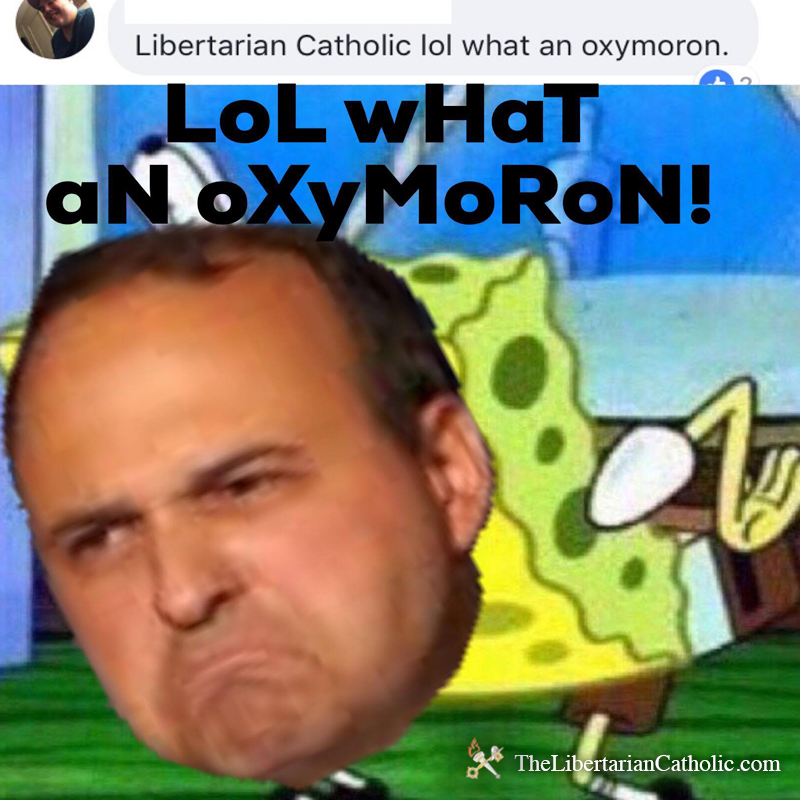
St. Thomas Aquinas, Pope St. John Paul II, Francisco de Vitoria, Dorothy Day, Pope Leo XIII, St. Augustine, JRR Tolkien, Frederick Bastiat, St. Elizabeth Ann Seton, Lord Acton, Judge Andrew Napolitano, Lew Rockwell, Justice Clarence Thomas, Justice Antonin Scalia, Francisco Suárez, Jeffrey Tucker, Alexis de Tocqueville, Bartolomé de las Casas, Pope St. John XXIII, St. Augustine, St. Polycarp, Venerable Fulton Sheen, Fr. Robert Sirico, Venerable József Mindszenty, Miguel Pro, and Tom Woods are not impressed.
Neither are Thomas Becket, René Girard, St. Evodius, Aloysius Stepinac, Domingo de Soto, the Vietnamese martyrs, Cardinal Robert Sarah, GK Chesterton, Martín de Azpilcueta, Jesús Huerta de Soto, Guido Hülsmann, Juan de Mariana, or St. Mother Theresa.
Many people see our name “The Libertarian Catholic” and instantly erupt in a self-congratulatory spasm of pompous disbelief. “How can you be libertarian and Catholic at the same time?” they scoff.
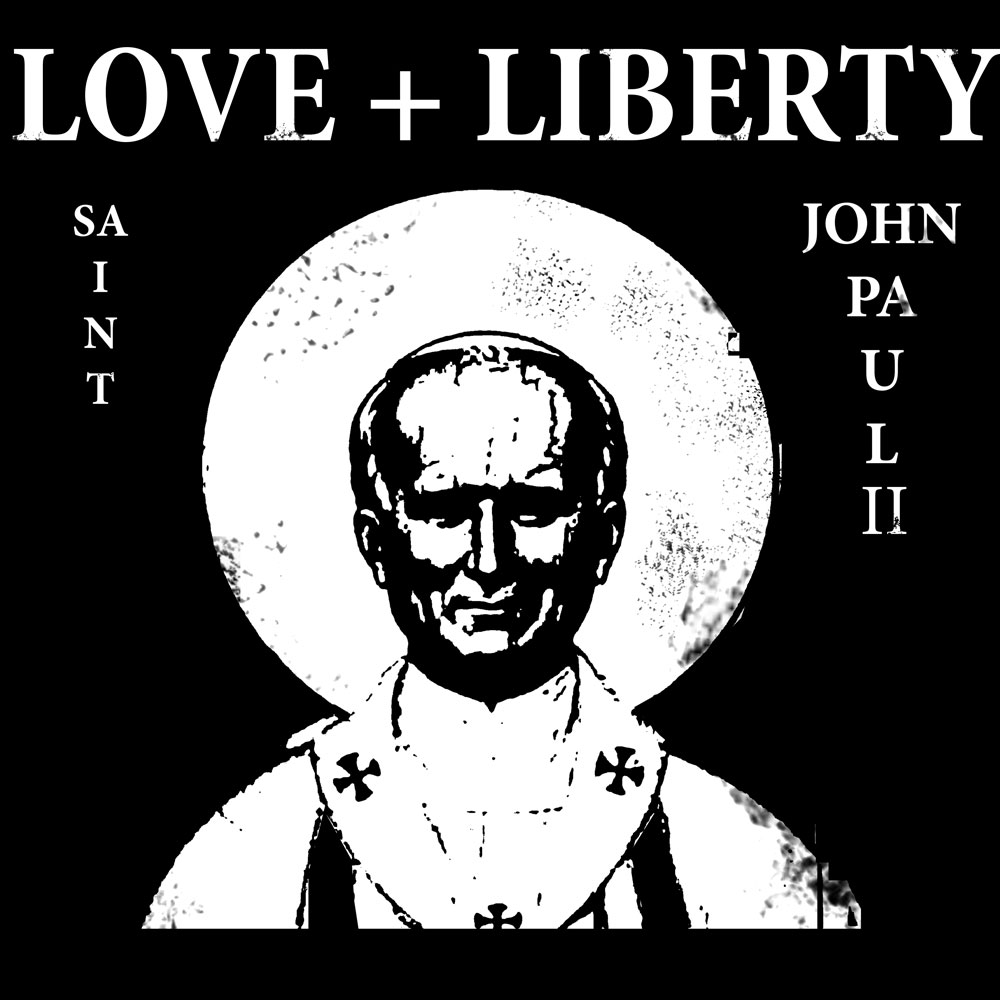
These people usually have a sophomoric understanding of either libertarianism or Catholicism or both and the rhetorical question actually has an answer if one genuinely understands both. It comes down to the symbiosis of the two concepts of love and freedom. There is no love (Catholicsm) without freedom (libertarianism) and no freedom without love.
Love and Liberty: A Necessary Unity
“There is no love without freedom, and no freedom without love.” At first glance, this sounds like an attempt to reconcile two rival camps: Catholic moral theology and libertarian political philosophy. Yet the statement is not a compromise. It is a claim about human nature itself. Love and liberty are not competitors. They are mutually dependent realities. Remove one, and the other collapses.
I. No Love Without Freedom
In Catholic thought, love is not mere sentiment. It is an act of the will: to will the good of the other. As articulated by Thomas Aquinas, love involves choice. It is intentional, deliberate, and self-giving. A coerced act, no matter how externally generous, cannot properly be called love.
This is why Christian theology insists that God grants human beings free will. The possibility of rejecting God is not an unfortunate design flaw; it is the necessary condition for authentic relationship. A “yes” that cannot be refused has no meaning. The drama of salvation presupposes freedom because love cannot be manufactured.
The same principle applies socially. Forced charity is redistribution, not generosity. Compelled belief is conformity, not faith. Imposed virtue is performance, not holiness. Love must be chosen, or it is hollow.
Freedom, then, is not opposed to love; it is its precondition.
II. No Freedom Without Love
Yet the relationship runs the other way as well. Freedom cannot survive without love.
Libertarianism rightly emphasizes the moral danger of coercion. It insists that individuals should be free from unjust force and free to pursue their own ends. This instinct aligns strongly with the Christian conviction that the human person possesses inherent dignity.
But freedom untethered from love degenerates. It becomes self-assertion without responsibility, autonomy without communion, rights without duties. A society that prizes choice above all else eventually corrodes the trust, restraint, and goodwill upon which liberty depends.
As John Paul II warned, freedom detached from truth and moral responsibility becomes self-destructive. If citizens use liberty only for self-gratification, social bonds weaken. When trust collapses, calls for control grow louder. In this way, loveless freedom eventually invites the very coercion it once resisted.
Freedom requires a culture of voluntary virtue. It requires citizens who restrain themselves, honor their commitments, care for the vulnerable, and seek the common good without being forced. In short, freedom requires love.
III. The Political and Moral Synthesis
Catholic social teaching offers two principles that illuminate this synthesis: subsidiarity and solidarity.
Subsidiarity holds that decisions should be made at the lowest competent level, protecting personal and local freedom from unnecessary centralization. Solidarity affirms that we are responsible for one another, not isolated atoms pursuing private gain.
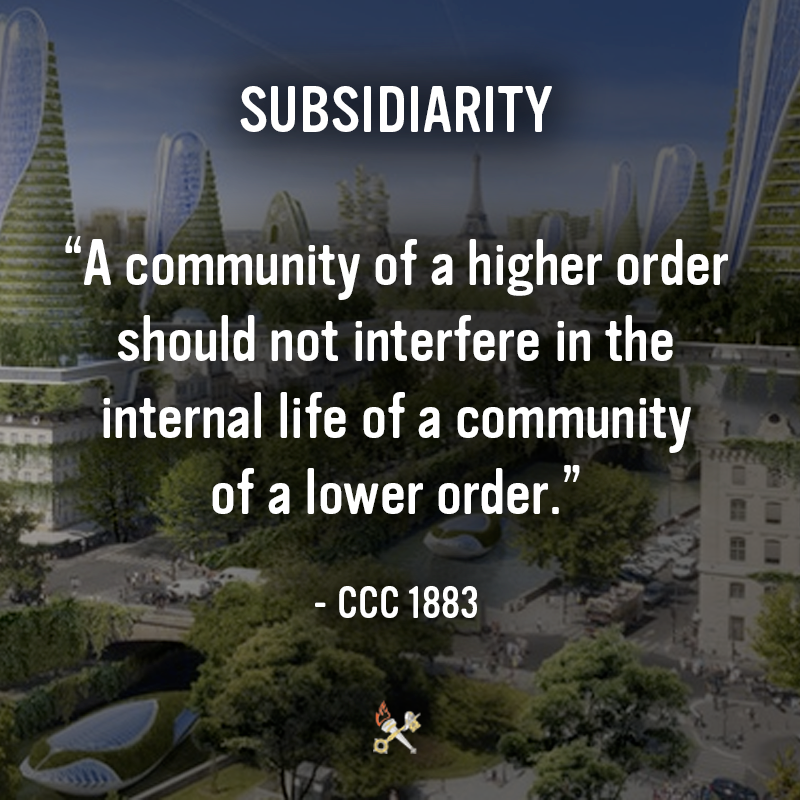
The two are not contradictory. Subsidiarity protects the space where love can be freely chosen. Solidarity ensures that freedom does not decay into indifference.
A free society cannot be sustained by law alone. Laws can restrain evil, but they cannot generate virtue. Markets can coordinate exchange, but they cannot create charity. Political liberty provides room for moral action; only love fills that room with meaning.
IV. The Personal Paradox
The deepest paradox of the Christian tradition is that we are most free when we give ourselves away. Freedom is not merely the power to choose among options; it is the capacity to choose the good. And the highest good is self-giving love.
A marriage is not sustained by contract alone but by voluntary fidelity. A community is not held together by regulation but by mutual care. A nation is not preserved by surveillance but by trust.
Love humanizes freedom. Freedom authenticates love.
Without freedom, love becomes tyranny. Without love, freedom becomes chaos. Together, they form the necessary conditions for human flourishing.
In the end, the statement is not political so much as anthropological: human beings are made for both liberty and communion. We are neither slaves nor isolated sovereigns. We are free persons called to love — and only in loving freely do we discover what freedom truly is.
There is no love without liberty and no liberty without love. There is no faith without freedom and no freedom without faith. There is no charity without choice and no choice without charity.
In an increasingly complex world, the synthesis of libertarian principles and Catholic moral values offers a unique perspective that champions both personal freedom and ethical living. This blend of freedom and faith demonstrates the versatility of these ideologies and shows how they can coexist harmoniously, creating a broader, more holistic worldview.
For more on this topic, read Summa Libertas: