 The Libertarian Catholic
Despite some misplaced comparisons to economic theory, Vox Day (Theodore Beale) has produced a sound refutation of the theory of evolution by natural selection in Probability Zero. He argues that modern evolutionary theory faces a serious mathematical problem. Rather than focusing on philosophy or theology, the book relies heavily on population genetics, probability, and genomic data to make its case.
MITTENS
Neo-Darwinian evolution proposes that random mutations naturally occur in the genes of organisms during reproduction. Occasionally, a mutation provides some advantage—making its carrier slightly more likely to survive and reproduce. Over many generations, beneficial mutations spread through a population and eventually become fixed, meaning virtually every member of the species possesses the mutation.
The central argument of Probability Zero is that this process is far too slow to account for the genetic differences observed between species.
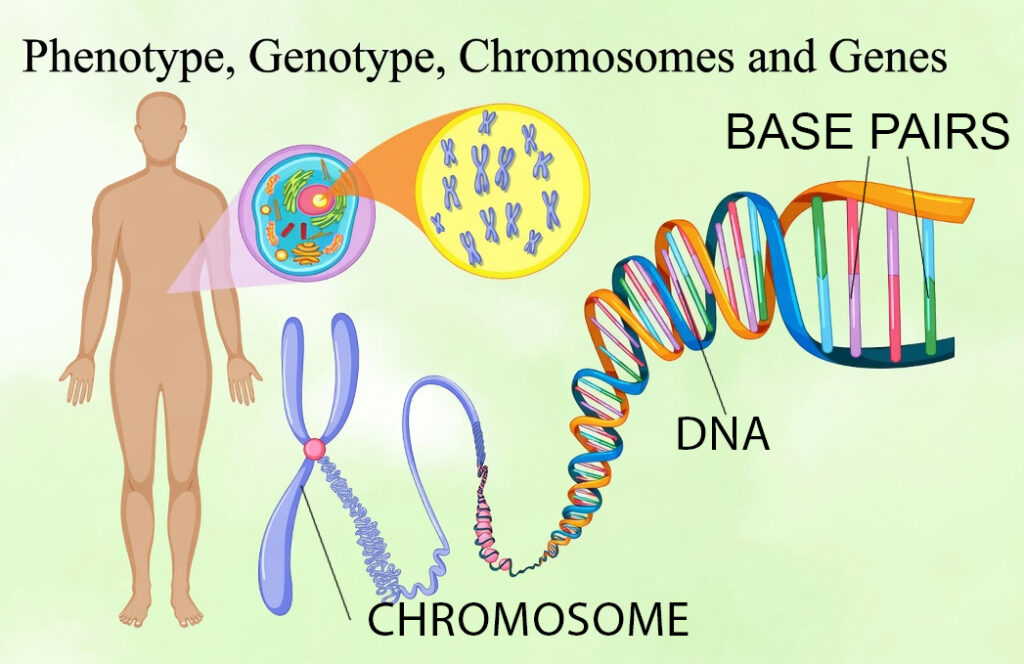
Drawing on data from experimental evolution and population genetics, Vox Day argues that a favorable mutation requires roughly 1,600 generations to become fixed in a population. He then compares this fixation rate to the number of genetic differences that must be explained between humans and a hypothetical human-chimpanzee common ancestor.
According to the book, the human and chimpanzee genomes differ by roughly 20 million base pairs. If these differences ultimately arose through mutations that had to spread and become fixed within their respective populations, then approximately 20 million fixation events would be required.
Using an average generation time of about 25 years for ancestral humans and great apes, Day calculates that:
20,000,000 fixations × 1,600 generations per fixation × 25 years per generation = 800 billion years
This figure is vastly larger than the roughly 6–9 million years that evolutionary biologists estimate have passed since humans and chimpanzees shared a common ancestor.
From this disparity, Day concludes that the standard neo-Darwinian mechanism of mutation plus natural selection lacks the time necessary to produce the observed genetic divergence. The MITTENS framework is presented as a mathematical demonstration that the required number of genetic changes could not have become fixed within the available evolutionary timeframe.
Critics dispute several of the assumptions underlying this calculation—including whether every genetic difference requires a separate fixation event, whether fixation rates derived from certain experimental systems can be generalized, and whether evolution proceeds primarily through serial fixations rather than multiple changes occurring simultaneously in populations. Nevertheless, the enormous gap between the estimated time required and the accepted evolutionary timeline forms the core of the book’s challenge to the Modern Synthesis.
Key Ideas
The book introduces several concepts that support this central argument.
The Bernoulli Barrier
Day argues that many evolutionary innovations require multiple coordinated genetic changes. Since each change must occur and spread through a population, the odds of obtaining several necessary mutations together become extremely small.
The Bio-Cycle Fixation Model
One criticism of evolutionary calculations is that bacteria reproduce far more quickly than animals. To address this, Day develops a model intended to account for differences between rapidly reproducing organisms and species with long generation times, such as mammals.
Haldane’s Dilemma
The book revisits the famous argument by geneticist J. B. S. Haldane that natural selection can only replace a limited number of genes within a population over a given period. Day argues that modern evolutionary theory has never fully solved this problem and that it remains a major constraint.
What Makes the Book Interesting
One of the book’s strengths is its focus on numbers rather than rhetoric. Day frequently cites published scientific papers, uses conservative assumptions where possible, and walks readers through his calculations step by step.
The writing is generally accessible for non-specialists, especially compared with most academic works on population genetics. Readers do not need advanced mathematical training to follow the main arguments.
Another notable feature is the book’s willingness to engage directly with critics. Many chapters address objections raised by biologists, bloggers, and online commentators.
The Assumptions Behind the Argument
The book’s conclusions depend on several key assumptions:
- That fixation of mutations is the primary bottleneck in evolution.
- That observed genetic differences largely require explanation through mutation and selection.
- That limits on fixation rates are more important than the ability of populations to explore many genetic possibilities simultaneously.
- That existing estimates of population sizes, generation times, and mutation effects are reasonably accurate.
If these assumptions are wrong, critics argue, the conclusions may not follow.
How Critics Respond
Evolutionary biologists have raised several objections.
Recombination and Parallel Evolution
Critics argue that evolution is not limited to one mutation becoming fixed at a time. Sexual reproduction allows populations to combine beneficial mutations from many individuals simultaneously, potentially speeding evolutionary change.
Neutral Evolution
Many genetic differences between species may not be adaptive at all. Critics argue that large numbers of neutral changes can accumulate without facing the same constraints Day emphasizes.
Gene Regulation and Development
Some scientists contend that major biological changes can result from relatively small changes in gene regulation rather than requiring large numbers of new mutations.
The Use of Bacterial Data
Critics also question whether fixation rates observed in bacteria can be meaningfully applied to animals with very different reproductive systems and population structures.
Probability Calculations
Perhaps the most common criticism is that evolution is not a random search for a predetermined target. Natural selection preserves successful changes, meaning the process is guided by feedback rather than relying on pure chance.
Overall Assessment
Probability Zero is not a neutral textbook. It is an aggressive and highly skeptical examination of modern evolutionary theory.
Supporters see it as a devastating mathematical critique that exposes a fundamental weakness in the Modern Synthesis. Critics view it as a sophisticated version of older anti-evolution arguments that overlooks important developments in population genetics.
Regardless of where one stands, the book raises questions about mutation rates, fixation limits, probability, and evolutionary timescales that have been debated by scientists for decades.
Readers interested in the mathematics behind evolution—whether supportive or skeptical of Darwinian theory—will likely find it thought-provoking. For a balanced perspective, it is best read alongside mainstream works on population genetics and evolutionary biology.